Most businesses assume higher production means higher trust.
So when it comes to testimonial videos, they picture a full production setup. Professional cameras, studio lighting, multiple angles, carefully controlled environments.
On paper, it sounds impressive.
But in reality, many highly polished testimonial shoots create the exact opposite effect businesses are trying to achieve.
They feel less believable.
That’s the part most companies miss.
Because when buyers watch a testimonial, they are not evaluating cinematography. They are subconsciously evaluating authenticity. They are trying to decide whether this feels real, relatable, and trustworthy.
And surprisingly often, remote video testimonials outperform highly produced shoots because they preserve the one thing buyers care about most.
Credibility.
The Trust Problem With Over-Produced Testimonials
There’s a point where production quality starts working against you.
When a testimonial feels too polished, too rehearsed, or too controlled, buyers become skeptical. They may not consciously think, “This feels fake,” but they start emotionally distancing themselves from what they’re watching.
The story loses its natural feel.
Perfect lighting, scripted delivery, aggressive editing, and overly cinematic visuals can unintentionally make the testimonial feel like an advertisement instead of a real customer experience.
And once something feels like an ad, trust drops.
That’s why some of the most expensive testimonial shoots end up underperforming.
Not because the production was bad.
Because the authenticity got lost.
Why Remote Testimonials Feel More Believable
Remote video testimonials naturally remove some of that polish.
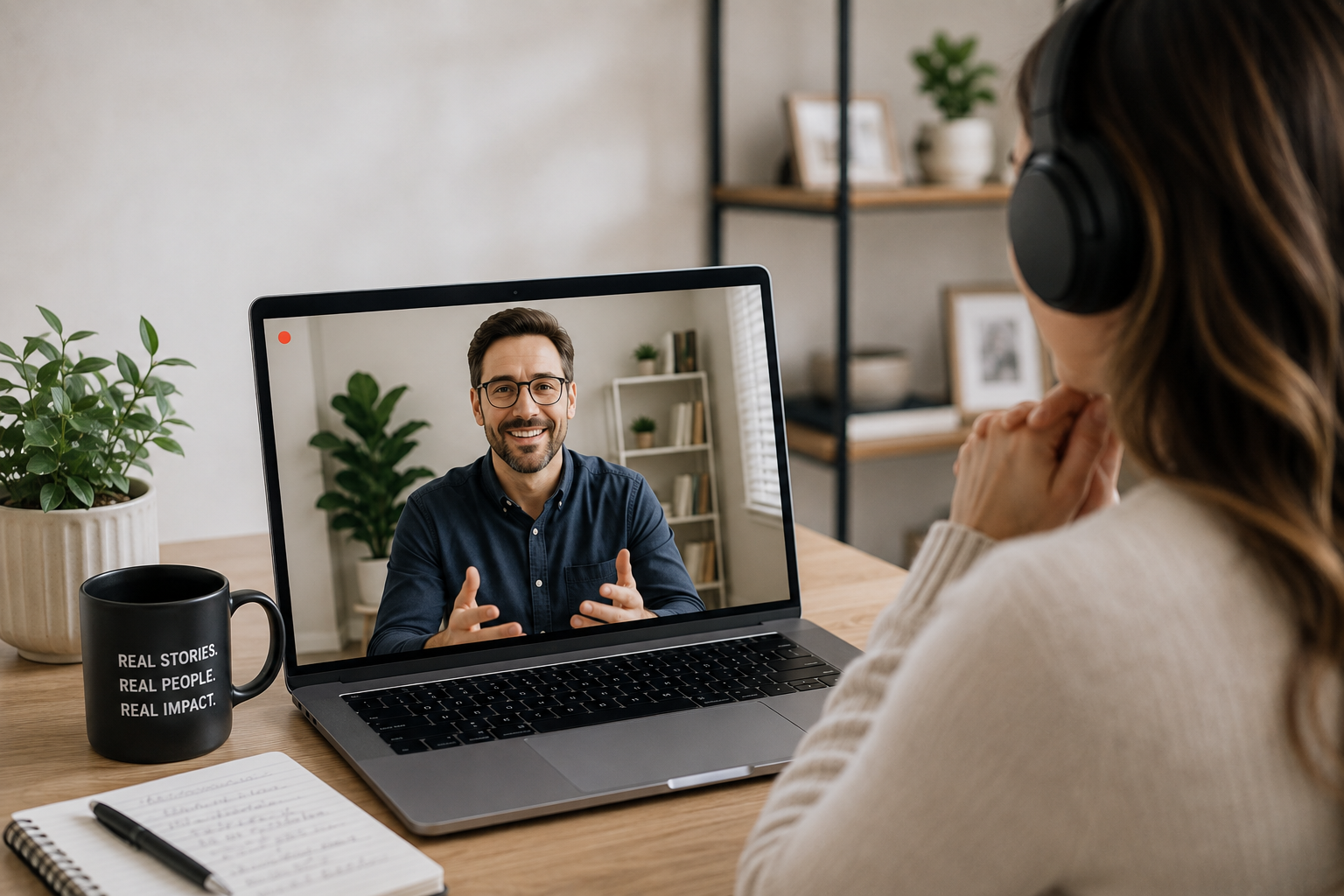
The client is usually in a familiar environment like their home or office. The conversation feels less formal. Their delivery tends to be more relaxed and conversational because they are not sitting under heavy lighting with a production crew watching them.
That changes the energy completely.
Instead of feeling “performed,” the story feels lived-in and real.
And buyers respond to that.
Because real is persuasive.
A slightly imperfect remote testimonial with genuine emotion will almost always outperform a perfectly polished testimonial that feels manufactured.
Buyers Are Looking For Relatability, Not Perfection
One of the biggest misconceptions in marketing is that professionalism automatically creates trust.
In some cases, it does.
But with testimonials specifically, relatability matters more.
Buyers want to see someone who feels like a real customer, not a spokesperson. They want to hear natural language, realistic hesitation, and emotional honesty.
Remote testimonials create that naturally because the environment itself feels more human.
The viewer subconsciously thinks:
-
“This feels like an actual person.”
-
“This sounds unscripted.”
-
“This feels believable.”
That emotional reaction matters more than production value.
Remote Testimonials Reduce Performance Pressure
Traditional shoots can unintentionally make clients nervous.
As soon as someone sits in front of expensive cameras, lights, and a production crew, they often become hyper-aware of themselves. They start overthinking their answers, trying to sound polished, and worrying about saying the “right” thing.
That pressure changes the testimonial.
Remote interviews create a very different experience.
The client is usually more comfortable, the setup feels simpler, and the conversation becomes more natural. Instead of performing, they start reflecting.
And reflection creates better stories.
The Story Matters More Than The Camera
This is where many businesses get distracted.
They obsess over gear, cameras, and production setup while ignoring the actual structure of the testimonial.
But buyers do not remember camera specs.
They remember stories.
They remember hearing:
-
what the client was struggling with
-
what almost stopped them from moving forward
-
what changed afterward
-
and how the experience felt
That’s what creates emotional connection.
A powerful story recorded remotely will outperform a weak story captured with expensive production almost every time.
Remote Testimonials Are Easier To Scale
There’s also a practical advantage.
Remote testimonial systems make it significantly easier to capture more customer stories consistently. Instead of coordinating travel, production schedules, and location logistics, businesses can record clients from anywhere.
This removes friction for everyone involved.
And because the process is easier, businesses tend to collect more testimonials over time, which strengthens overall trust and proof across the brand.
Tools like Riverside and Zoom have made remote recording dramatically easier while still allowing businesses to capture strong audio and video quality.
But again, the platform itself is not the differentiator.
The story is.
Why Authenticity Is Winning In Modern Marketing
Buyers today are more skeptical than ever.
They’ve seen heavily produced ads, scripted influencer content, and overly polished marketing for years. Because of that, audiences have become incredibly sensitive to anything that feels manufactured.
Authenticity now performs better precisely because it feels harder to fake.
That’s why raw founder videos, casual behind-the-scenes content, and conversational testimonials are often outperforming polished corporate marketing across social media and websites alike.
Remote testimonials fit naturally into this shift.
They feel closer to real life.
And real life builds trust.
When High-End Production Still Makes Sense
This does not mean production quality is irrelevant.
Strong lighting, clean audio, and thoughtful editing still matter. A poorly executed remote testimonial can absolutely hurt credibility if the quality is distracting.
The goal is balance.
You want the testimonial to feel professional enough to represent your brand well, while still preserving the authenticity and natural energy that makes the story believable.
The best testimonial videos do not feel sloppy.
They feel real.
The Bottom Line
Remote video testimonials often outperform highly polished shoots because buyers trust authenticity more than perfection.
They feel more natural, more relatable, and more believable. They reduce performance pressure, preserve emotional honesty, and allow the customer’s real story to come through without feeling overly controlled.
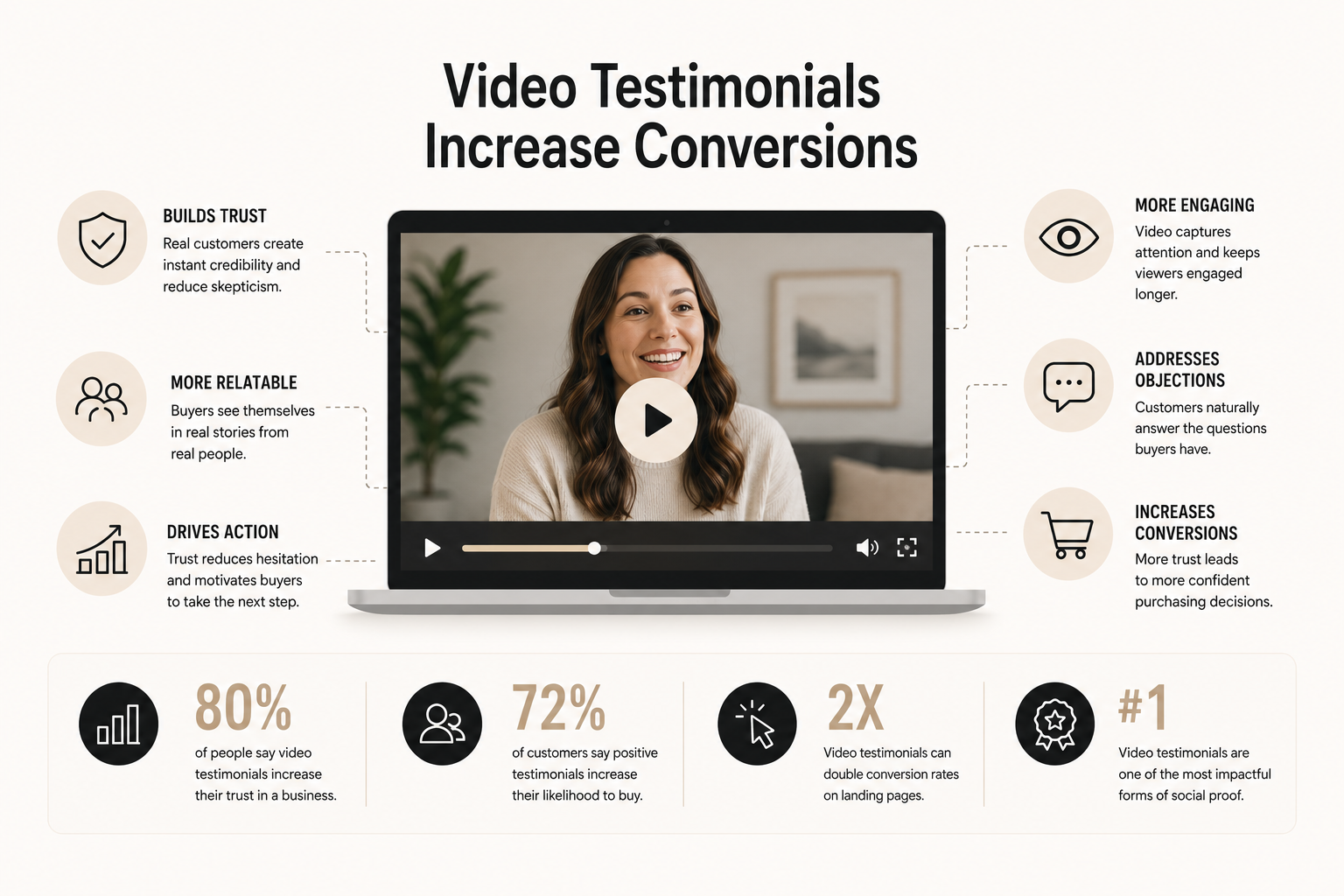
And at the end of the day, that’s what actually increases conversions.
Not how cinematic the video looks.
But whether the viewer believes it.