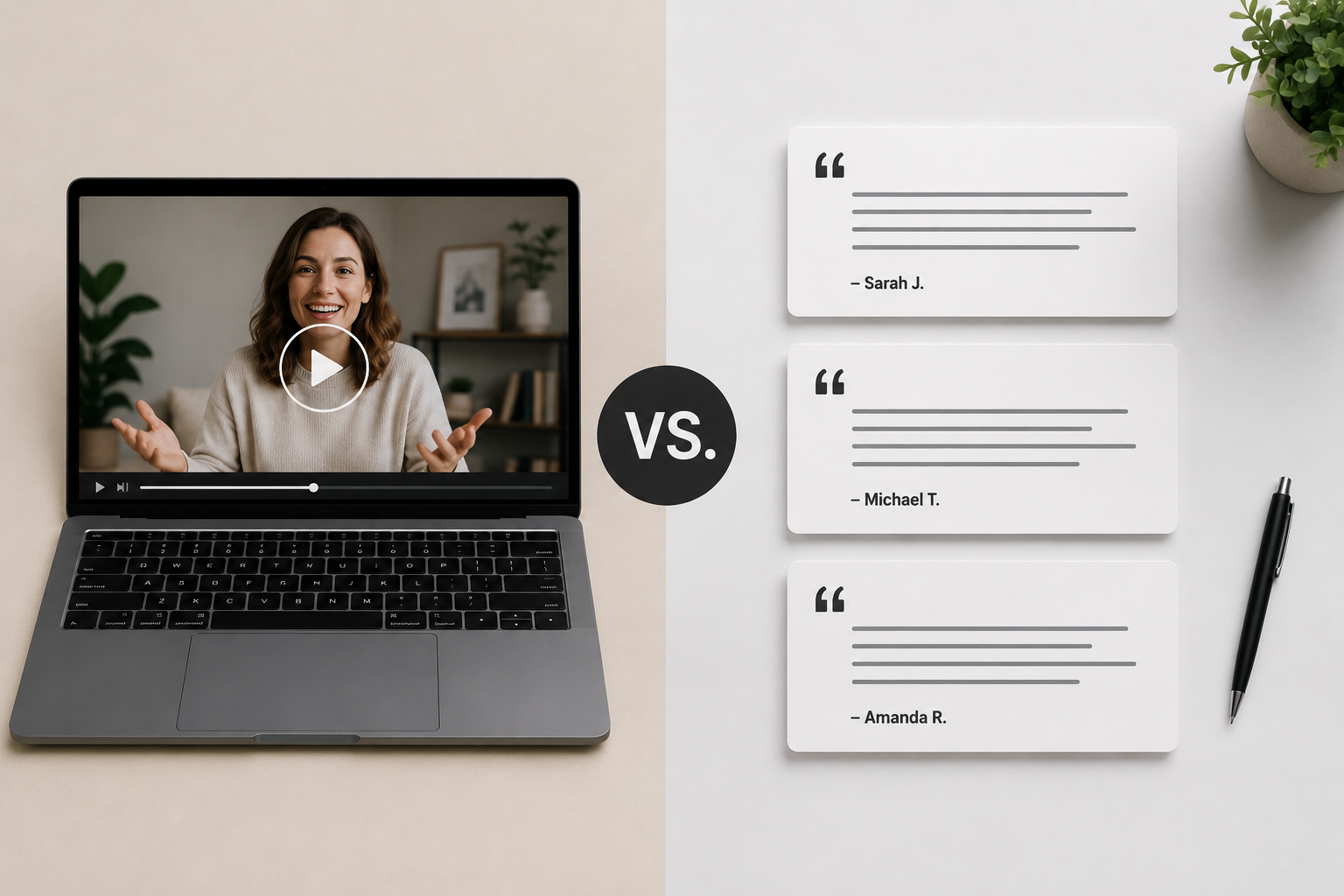
Most businesses think making a video testimonial is simple.
Find a happy client, record a few answers, edit it together, and post it online.
Technically, that is a testimonial video.
But it’s usually not one that influences buying decisions.
That’s the disconnect most businesses never realize.
Because making a testimonial video is not the same thing as creating a conversion asset. One simply captures praise. The other reduces doubt, builds trust, and helps a future buyer feel confident moving forward.
If you’re trying to learn how to make video testimonials, the goal should not just be to record someone saying nice things.
It should be to capture a story that actually changes how someone feels about your business.
Why Most Video Testimonials Don’t Work
The majority of testimonial videos fail for one simple reason.
They stay too surface-level.
The client talks about how great the experience was, how professional the team felt, or how happy they are with the outcome. Everything sounds positive, but nothing feels persuasive.
That’s because buyers are not looking for compliments.
They are looking for proof.
They want to understand:
-
what problem existed before
-
what almost stopped the customer from moving forward
-
what changed after
-
and whether that outcome feels relevant to them
Without those elements, even a beautifully filmed testimonial will struggle to convert.
Step 1: Start With The Right Client
The best testimonial videos start before the camera is even turned on.
Choosing the right client matters more than most businesses realize. You want someone who can clearly articulate their experience, explain their starting point, and speak naturally about the transformation they experienced.
This does not mean they need to be polished on camera.
In fact, overly polished clients can sometimes feel less believable.
What matters is clarity, emotion, and relatability.
A client who can explain what they were struggling with before working with you will almost always create a stronger testimonial than someone who simply says they were happy with the service.
Step 2: Focus On The Story, Not The Praise
Most businesses ask the wrong questions.
They ask:
-
“How was your experience?”
-
“Would you recommend us?”
-
“What did you like most?”
These questions lead to generic answers.
Instead, focus on the customer’s journey.
Ask questions like:
-
“What was happening before you started looking for help?”
-
“What concerns did you have before moving forward?”
-
“What changed after working together?”
-
“What would have happened if you didn’t solve this problem?”
These questions create structure.
And structure is what makes testimonials persuasive.
Step 3: Make The Client Feel Comfortable
People give better answers when they feel relaxed.
This is one of the biggest reasons many testimonial videos feel stiff or scripted. The client is nervous, overthinking, or trying to “sound professional” instead of simply speaking naturally.
The goal is not perfection.
It’s authenticity.
Start with casual conversation before filming. Explain that they do not need to memorize anything and that pauses or mistakes can easily be edited. Keep the environment calm and conversational.
The more comfortable they feel, the more believable the final video becomes.
Step 4: Don’t Overcomplicate The Setup
One of the biggest misconceptions about video testimonials is that they require expensive production.
Good lighting and clear audio matter, but story matters more.
A strong testimonial recorded on a phone can outperform a highly produced testimonial that lacks emotional depth or structure.
Many businesses successfully record testimonials remotely using tools like Riverside or Zoom, while others capture them in person using a simple camera setup.
The platform is not what makes the testimonial effective.
The story is.
Step 5: Capture Specific Details
Specificity is what makes testimonials believable.
If the customer says:
-
“Things improved a lot”
That sounds vague.
But if they say:
-
“Before working together, we were losing leads because prospects didn’t trust our website. After adding the testimonial videos, sales conversations became noticeably easier.”
Now the viewer can picture the transformation.
The more grounded the details are in reality, the more persuasive the testimonial becomes.
Step 6: Edit For Clarity, Not Perfection
Editing should strengthen the story, not sterilize it.
One of the biggest mistakes businesses make is over-editing testimonials until they no longer feel natural. Every pause disappears, every sentence becomes polished, and the result starts to feel controlled.
That reduces trust.
A strong testimonial edit keeps the authenticity intact while improving pacing and structure. The viewer should feel like they are listening to a real person, not a scripted marketing piece.
That balance matters.
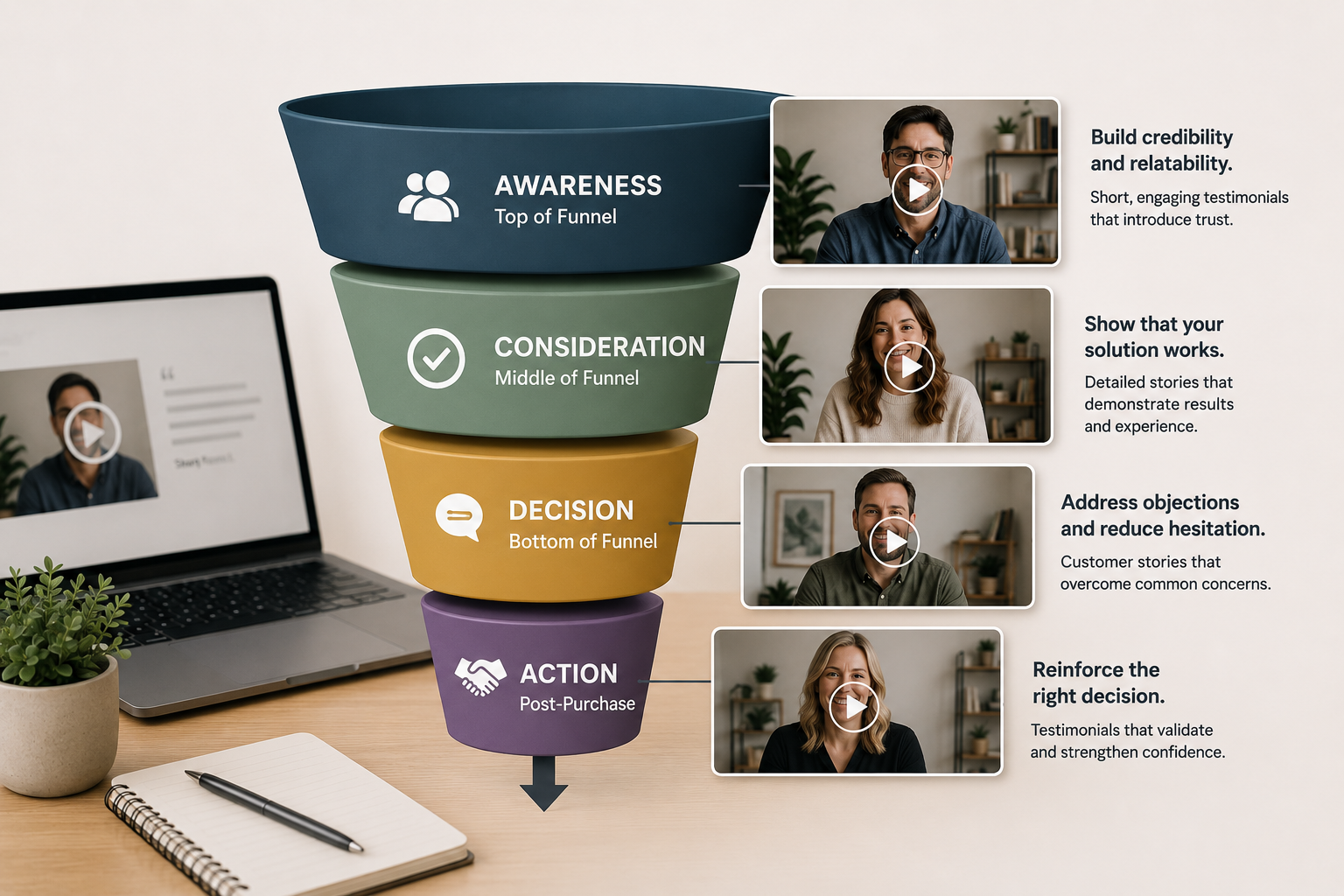
Step 7: Use The Testimonial Strategically
Even a great testimonial won’t work if it’s placed incorrectly.
Testimonials should appear where decisions are happening:
-
on homepages
-
near calls-to-action
-
on service pages
-
near pricing sections
-
in sales follow-up emails
This is where they have the biggest impact because they reduce hesitation at the exact moment doubt appears.
If they are buried on a separate testimonials page, most buyers will never see them when they actually matter.
Why Video Testimonials Increase Conversions
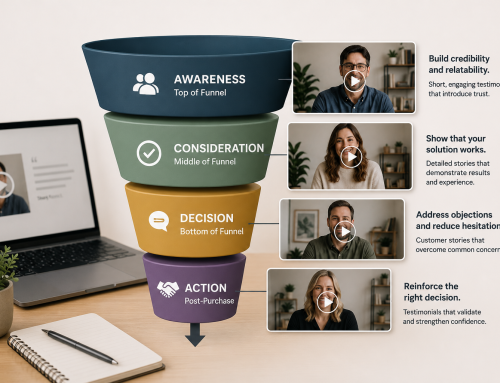
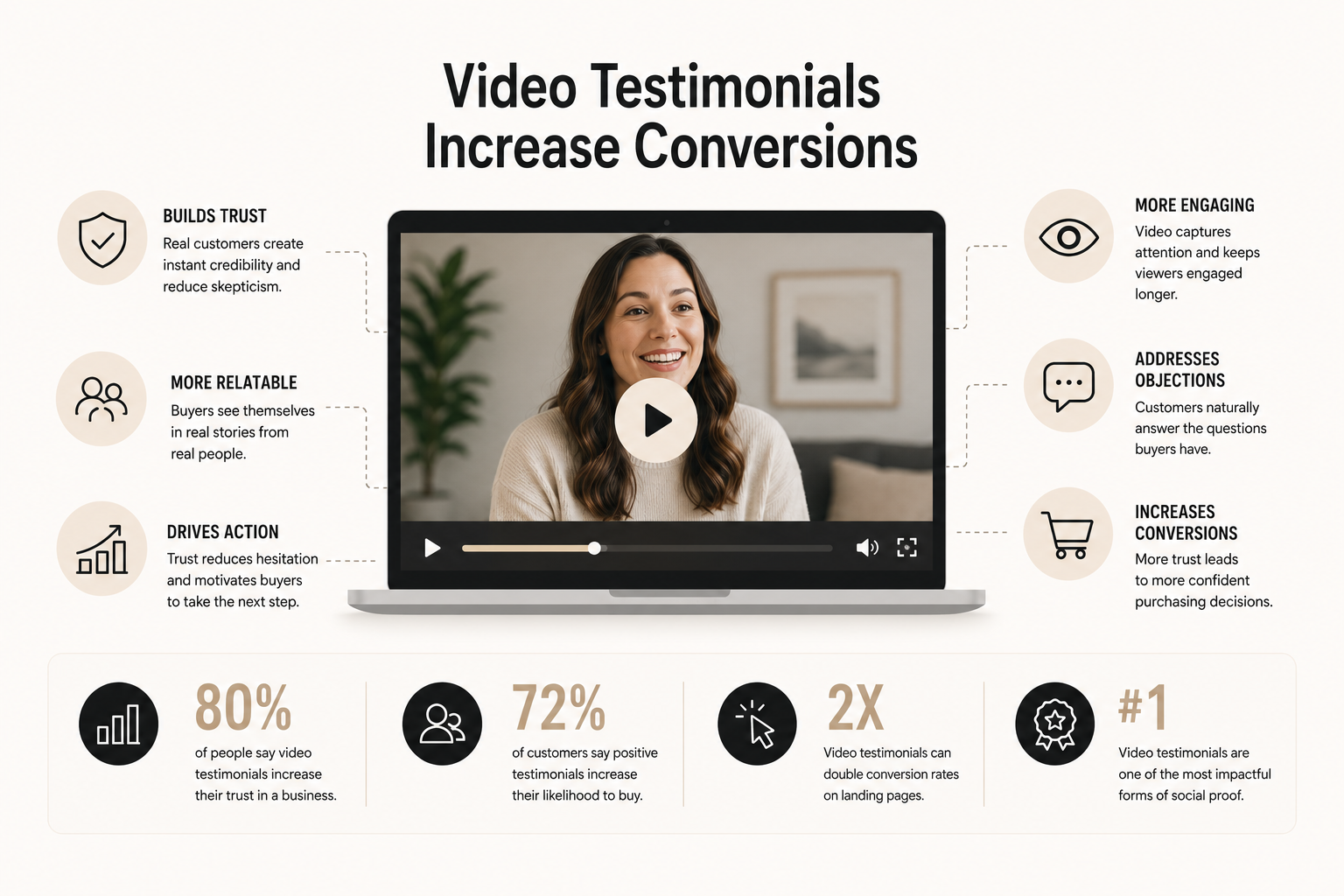
Video testimonials work because they help buyers emotionally process the decision.
Instead of hearing claims from the company, they hear someone else explain:
-
the problem
-
the hesitation
-
the decision
-
and the outcome
That creates relatability.
And relatability builds trust much faster than traditional marketing alone.
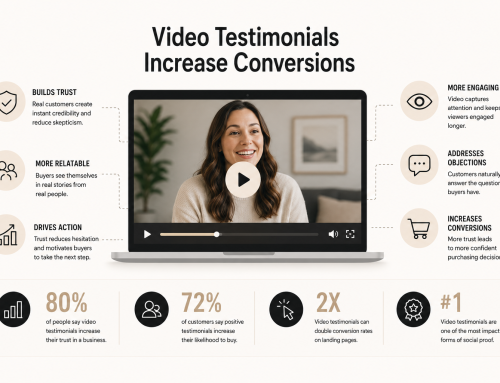
This is why businesses using video testimonials often see meaningful improvements in conversion rates, lower hesitation during sales conversations, and stronger buyer confidence overall.
The Bottom Line
If you want to learn how to make video testimonials that actually work, focus less on production and more on story.
Choose the right client, guide the conversation properly, capture real transformation, and keep the final result authentic.
Because the most effective testimonial videos are not the most polished ones.
They’re the ones that make a future buyer think:
“That’s exactly what I’m going through.”
And that’s what ultimately drives conversions.