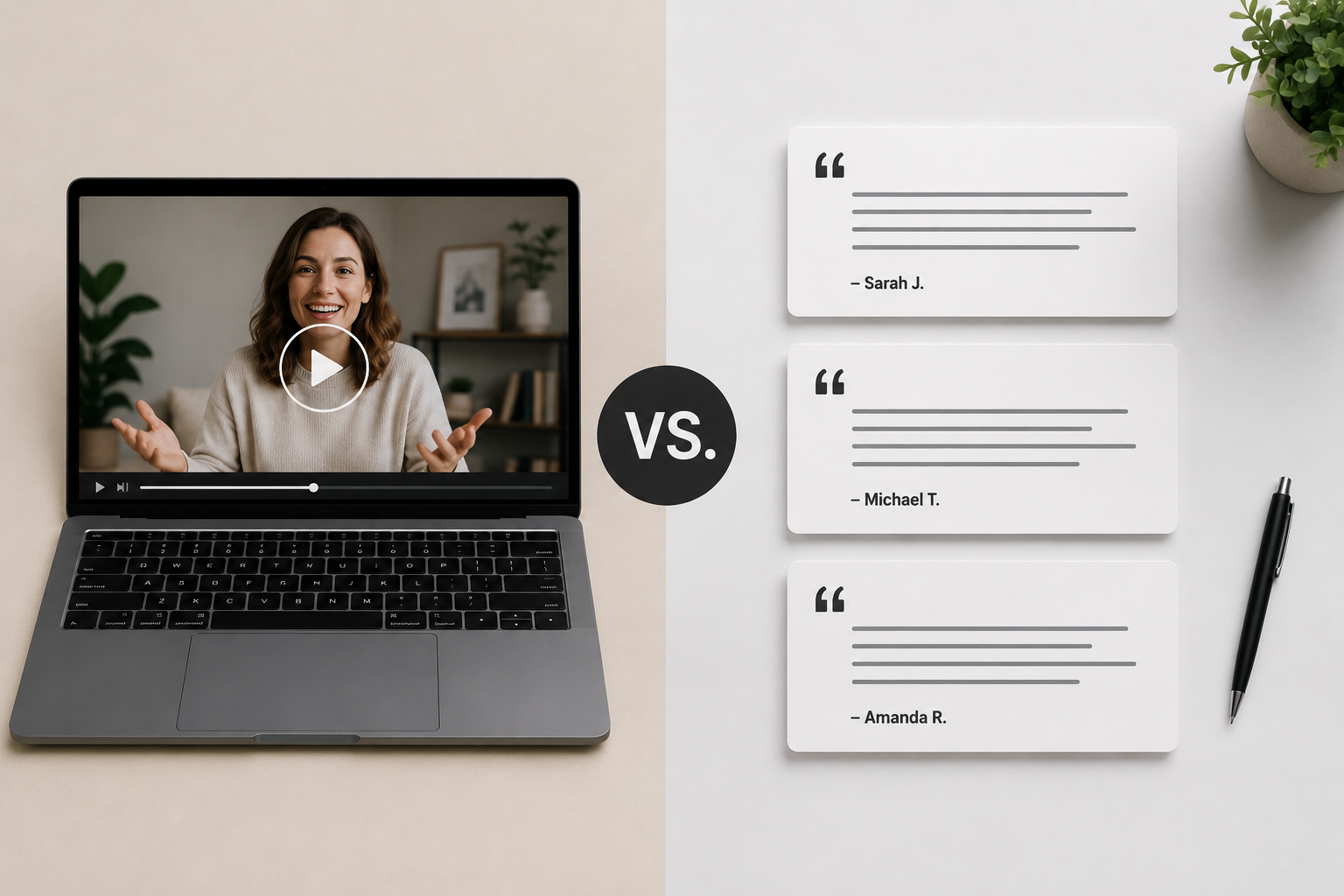
There is a balance that every great testimonial video needs to get right. You want the story to help someone feel more confident about choosing your business, but you never want it to feel like the customer is trying to sell them something.
That distinction is important because people are very good at recognizing when something feels overly scripted or promotional. A customer can genuinely love your business, but if their testimonial has been coached too heavily, edited too aggressively, or built entirely around praise, some of that credibility gets lost.
If you want to understand how to build trust with video testimonials, the goal isn’t simply to get happy customers on camera. It’s to capture their experiences in a way that helps future buyers recognize their own questions, concerns, and goals in the story.
This is something we think about constantly when creating testimonial videos. The most effective stories aren’t necessarily the ones with the biggest claims. They’re the ones that make a prospective customer think, that’s exactly where I am right now.
Start With The Customer Your Buyers Will Relate To
Not every happy customer is automatically the right person for a testimonial video. When we’re deciding which customer stories are worth capturing, one of the first things we look for is a clear journey that future buyers can understand.
Think about the people currently considering your business. What problem are they dealing with? What might make them hesitate? What do they need to believe before they’re comfortable moving forward? Then look at your existing customers and find the people who have already gone through that process.
Someone who experienced the same problem, had similar concerns, made the decision, and can now reflect on what happened afterward gives you a much stronger story than someone who can simply say they enjoyed working with you.
The closer the customer’s experience is to the journey your prospective buyers are currently navigating, the easier it becomes for those buyers to see themselves in the story.
Let Customers Talk About Their Hesitation
One of the most valuable parts of a testimonial is often the part businesses are tempted to remove: the customer’s uncertainty before they bought.
Maybe they thought the service was expensive. Maybe they weren’t sure it would work for them. Maybe they had tried something similar before and were disappointed. Or maybe they simply weren’t convinced they needed to make a change yet.
Those details don’t weaken a testimonial. When handled naturally, they can make it significantly more persuasive because they reflect what prospective customers are already thinking.
If someone watching your video is worried about price and hears a customer explain that they had the exact same concern, the story suddenly becomes much more relevant. The customer can then explain what made them comfortable moving forward and whether their perspective changed afterward.
Instead of your business trying to overcome the objection, another customer is simply sharing how they personally worked through it. That feels very different to the person watching.
Don’t Ask Questions That Only Produce Compliments
The questions you ask during a testimonial interview have an enormous impact on the final story.
If you ask someone, “What did you love about working with us?” you’re essentially asking them to compliment the company. You’ll probably get a positive answer, but it may not tell a future buyer anything they actually need to know.
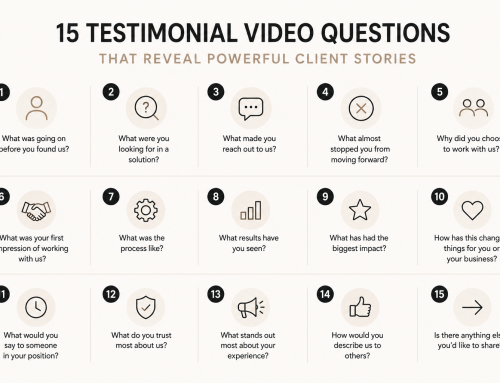
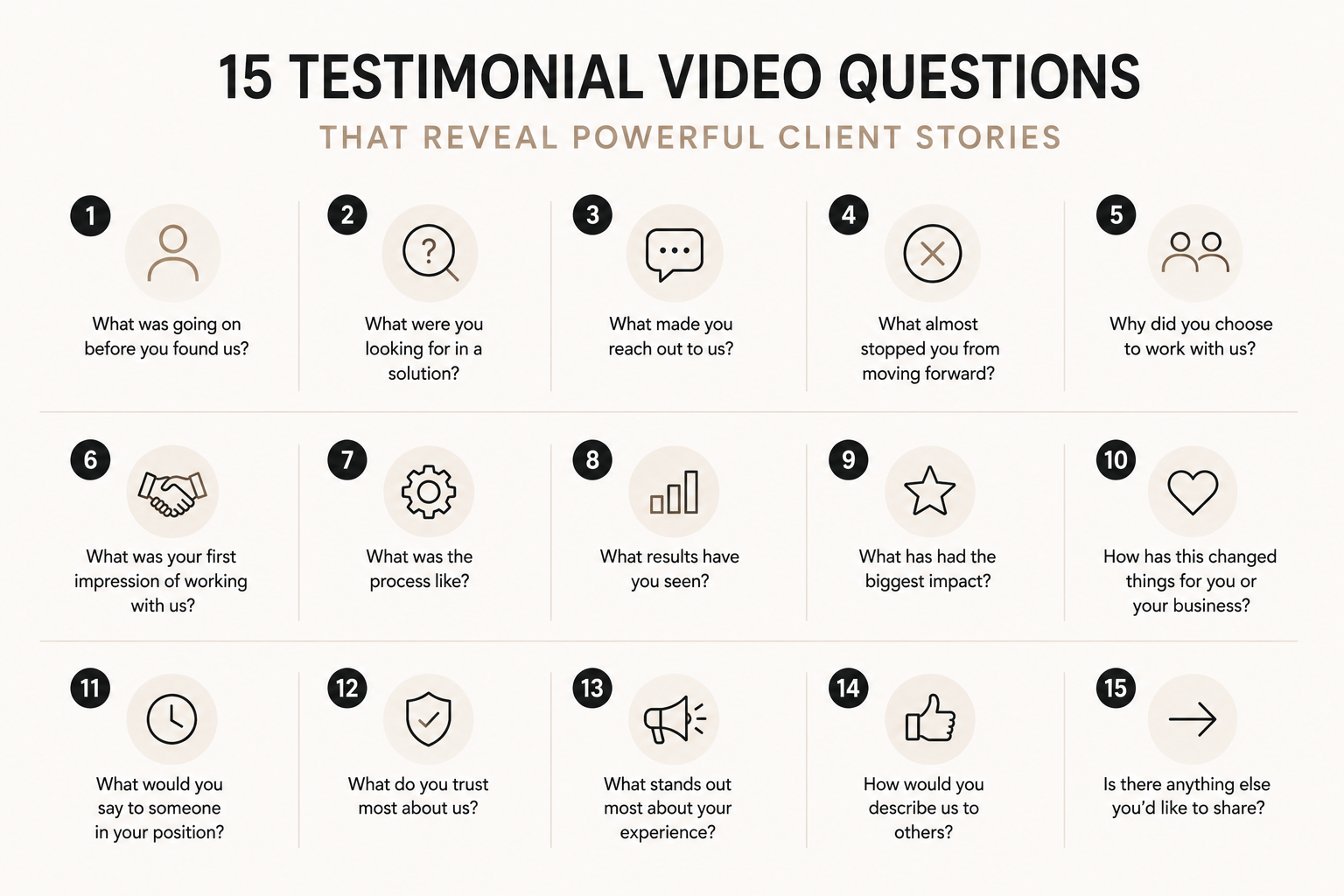
We prefer questions that help customers reflect on the full experience. What was happening before they started looking for a solution? What had they already tried? What were they unsure about? Why did they ultimately decide to move forward? What happened once they did?
These questions naturally create a beginning, middle, and end without requiring the customer to memorize a script. They also tend to uncover much better material because the customer isn’t being asked to perform. They’re being asked to remember.
Specific Details Make Customer Stories More Believable
One of the things we listen for closely during testimonial interviews is vague language.
A customer might say, “It was an amazing experience,” and genuinely mean it. But that statement alone doesn’t give a prospective buyer much information.
That’s when a good interviewer goes deeper. What specifically made the experience different? What changed? Can they give an example? What did that improvement actually look like in their day-to-day life or business?
You don’t always need dramatic statistics to make a testimonial credible. Specificity can be surprisingly simple. A customer explaining that sales calls became easier, that they finally stopped worrying about a particular problem, or that something that used to take an entire day now takes an hour can be incredibly effective.
Those details give the viewer something concrete to understand, which makes the overall story feel much more believable.
Professional Doesn’t Have To Mean Perfect
We believe testimonial videos should represent your business professionally. Good audio matters. Thoughtful framing matters. Editing matters.
But there is a point where polishing a testimonial too much can start working against you.
Real people pause when they speak. They occasionally search for the right word. They laugh, change their expression, or take a second to think about an answer. Those moments aren’t necessarily mistakes that need to be removed. Sometimes they’re the moments that make the person feel most genuine.
The goal of testimonial video editing should be to make the customer’s story clearer and more engaging without removing their personality in the process.
You want the final video to feel intentional and professionally created, while still leaving the viewer with the sense that they just heard from a real customer rather than someone delivering marketing copy.
Let Viewers See The Person Behind The Story
B-roll can be a great addition to testimonial videos, but we don’t believe every second needs to be covered with another visual. Sometimes the customer’s face is the most important thing on screen.
If someone is describing an emotional moment, reflecting on a difficult decision, or talking about something that genuinely changed for them, seeing their expression adds another layer of credibility to what they’re saying.
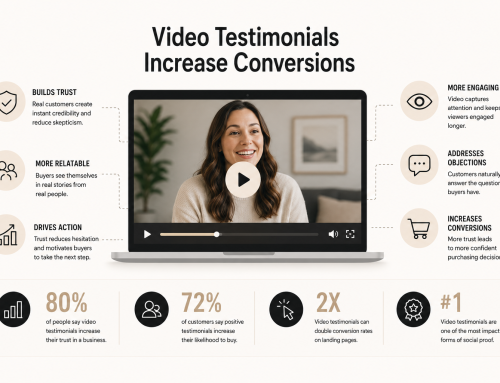
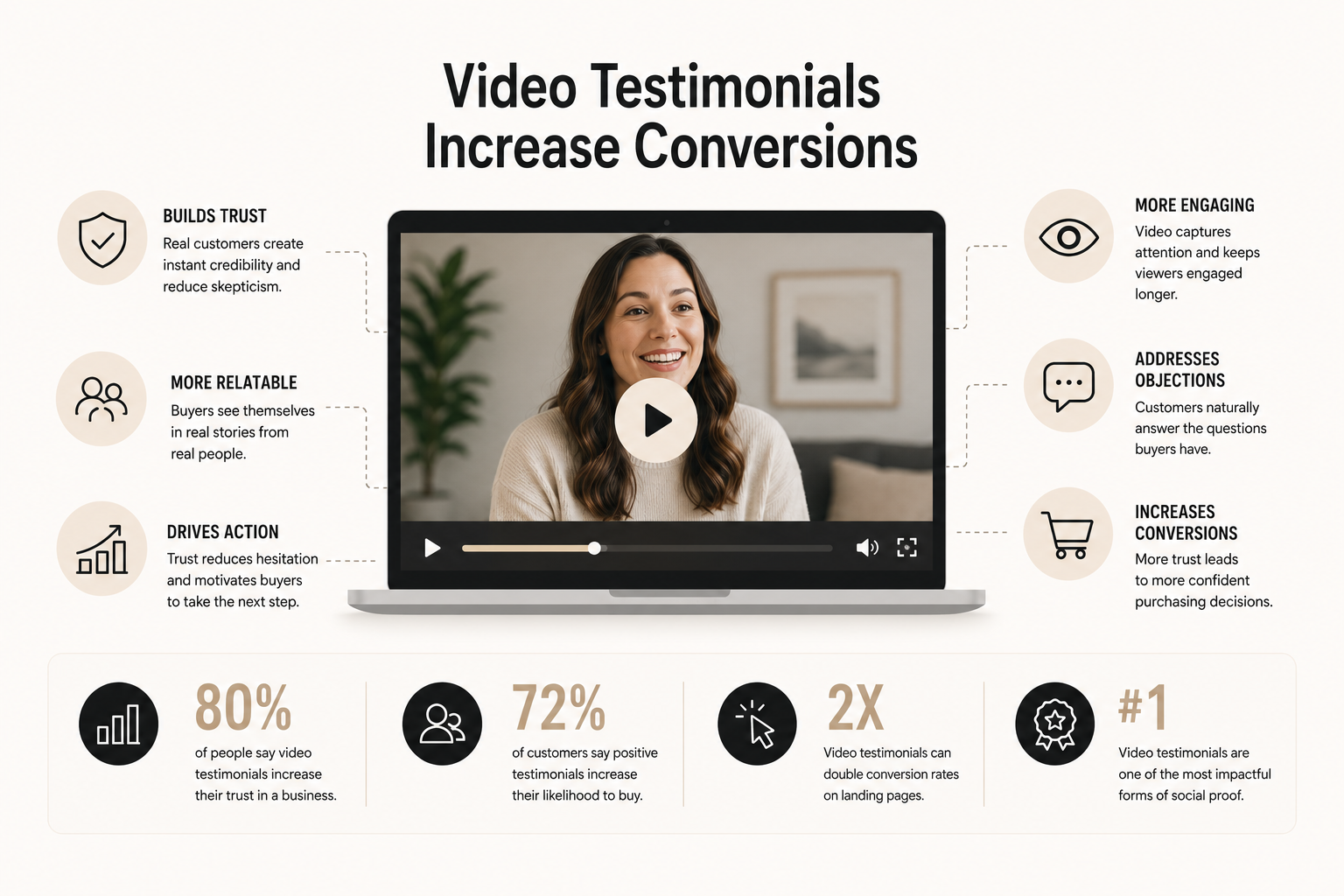
Tone of voice, pauses, expressions, and body language all give viewers context that they don’t get from a written testimonial. That is part of what makes video such a powerful form of social proof. The viewer isn’t simply reading a positive statement. They’re experiencing the person behind it.
Why Remote Video Testimonials Can Feel More Authentic Than Polished Shoots
There’s an assumption that the more polished a testimonial video looks, the more effective it will be. In our experience, that isn’t necessarily true. In fact, highly produced testimonial shoots can sometimes create the exact opposite effect.
Put a customer in a studio with multiple cameras, lights, crew members, and a tightly controlled setup, and they become very aware that they’re being filmed. Their answers can become more careful, rehearsed, and performative.
Remote testimonial interviews remove much of that pressure. A customer can join from their own home or office, sit somewhere familiar, and have an actual conversation with an interviewer. Once they become comfortable, they often stop thinking about the recording altogether. That’s when you start getting the natural pauses, honest reactions, specific details, and unexpected comments that make a customer story genuinely believable.
Platforms like Riverside make it possible to capture high-quality remote footage without sacrificing that relaxed environment, and even a straightforward Zoom conversation can produce a compelling story when the interview itself is handled well.
The goal isn’t to recreate a commercial shoot through a computer. It’s to use the remote environment to get closer to a real conversation.
That is a major reason we’ve built our testimonial process around remote interviews. For trust-driven content, we don’t see remote recording as the lesser version of an in-person production. We often prefer it. It removes unnecessary production pressure, makes participation easier for customers, and helps us capture the kind of candid responses that can get lost when a testimonial becomes too polished.
A beautiful video can get someone’s attention. A believable customer story can influence their decision. For testimonial content, we’d choose the latter every time.
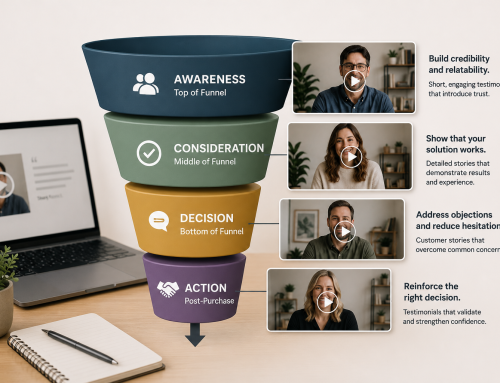
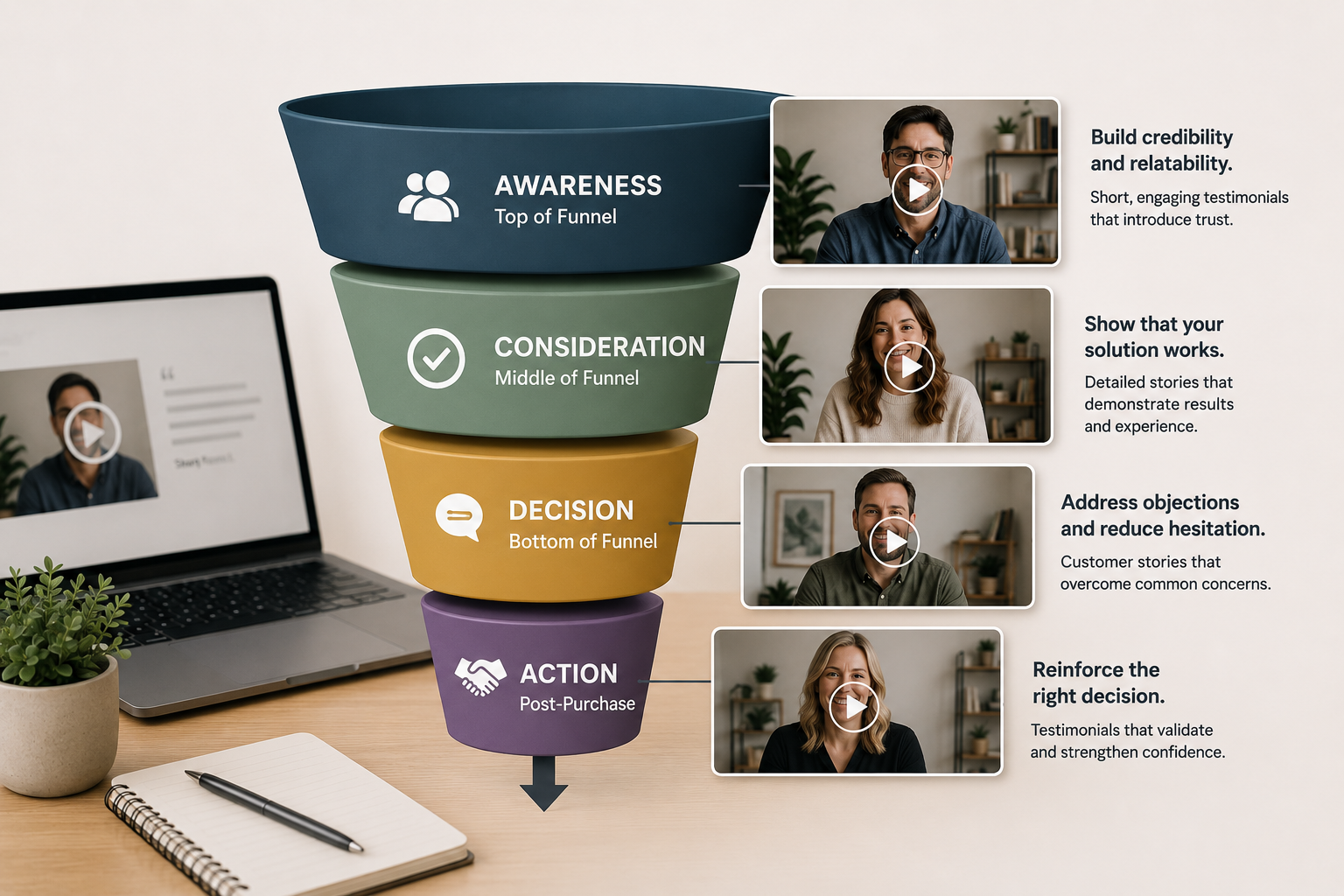
Use Different Testimonials To Build Different Types Of Trust
Another reason we recommend collecting multiple testimonial videos is that no single customer story can address everything a prospective buyer wants to know.
One customer might have a powerful story about results. Another might explain how responsive the company was throughout the process. Someone else might talk about being hesitant because of the investment, while another customer may describe how easy the experience was after expecting it to be complicated.
Together, those stories create a much fuller picture of what it’s actually like to work with your business.
There is also a credibility component to having multiple testimonials. If a company claims to have a long history of happy customers but only has one testimonial to show for it, a prospective buyer may naturally wonder why there isn’t more proof.
One great testimonial is valuable. A collection of different customers consistently describing positive experiences begins to establish a pattern.
Put Testimonials Where Buyers Actually Need Reassurance
Where you place testimonial videos matters almost as much as the stories themselves.
A dedicated testimonial page can be useful, but it shouldn’t be the only place customers encounter your proof. Most people aren’t going to stop what they’re doing, navigate to a separate page, watch several videos, and then return to their buying decision.
Instead, think about where uncertainty naturally appears throughout your website and sales process.
If buyers frequently hesitate around pricing, a relevant testimonial can help near that part of the journey. If you’re making an important claim on a service page, show a customer whose experience supports it. If people tend to hesitate before booking a consultation, placing the right customer story near that call-to-action can provide reassurance at exactly the right moment.
The strongest testimonial strategy isn’t simply about collecting more videos. It’s about matching the right customer story to the right buyer concern.
Think Of Testimonials As Customer Stories, Not Endorsements
This is probably the biggest shift we encourage businesses to make.
A testimonial doesn’t need to be a customer spending two minutes explaining how wonderful your company is. It should help the next customer understand what making this decision might actually look like.
That means capturing the situation before, the uncertainty surrounding the decision, the experience itself, and what changed afterward. When those pieces come together naturally, the viewer doesn’t need to be told that your business is trustworthy. They have enough information to begin reaching that conclusion themselves.
And that is ultimately what a strong testimonial should do.
The Bottom Line
Building trust with video testimonials isn’t about making customers sound more impressive. It’s about capturing their experiences clearly enough that another person can understand and relate to them.
Choose customers who represent the buyers you’re trying to reach. Give them room to talk honestly about hesitation. Ask questions that uncover specifics instead of generic praise. Create an environment that encourages a genuine conversation, and edit the story professionally without polishing away the humanity.
Then make sure those stories appear where prospective buyers actually need reassurance.
When all of those pieces work together, a testimonial becomes much more than a positive review on video. It becomes credible proof from someone who has already made the decision your next customer is considering.