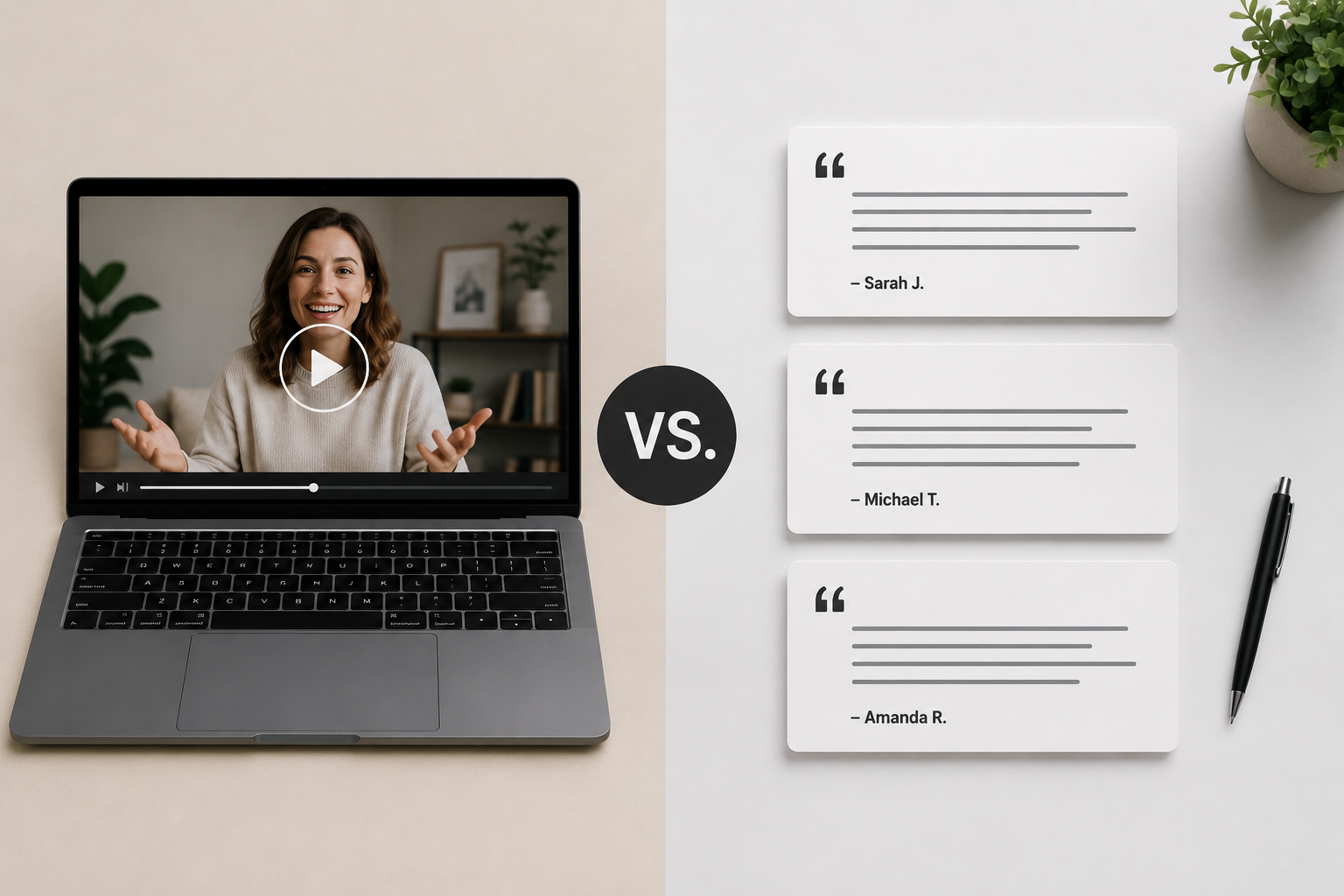
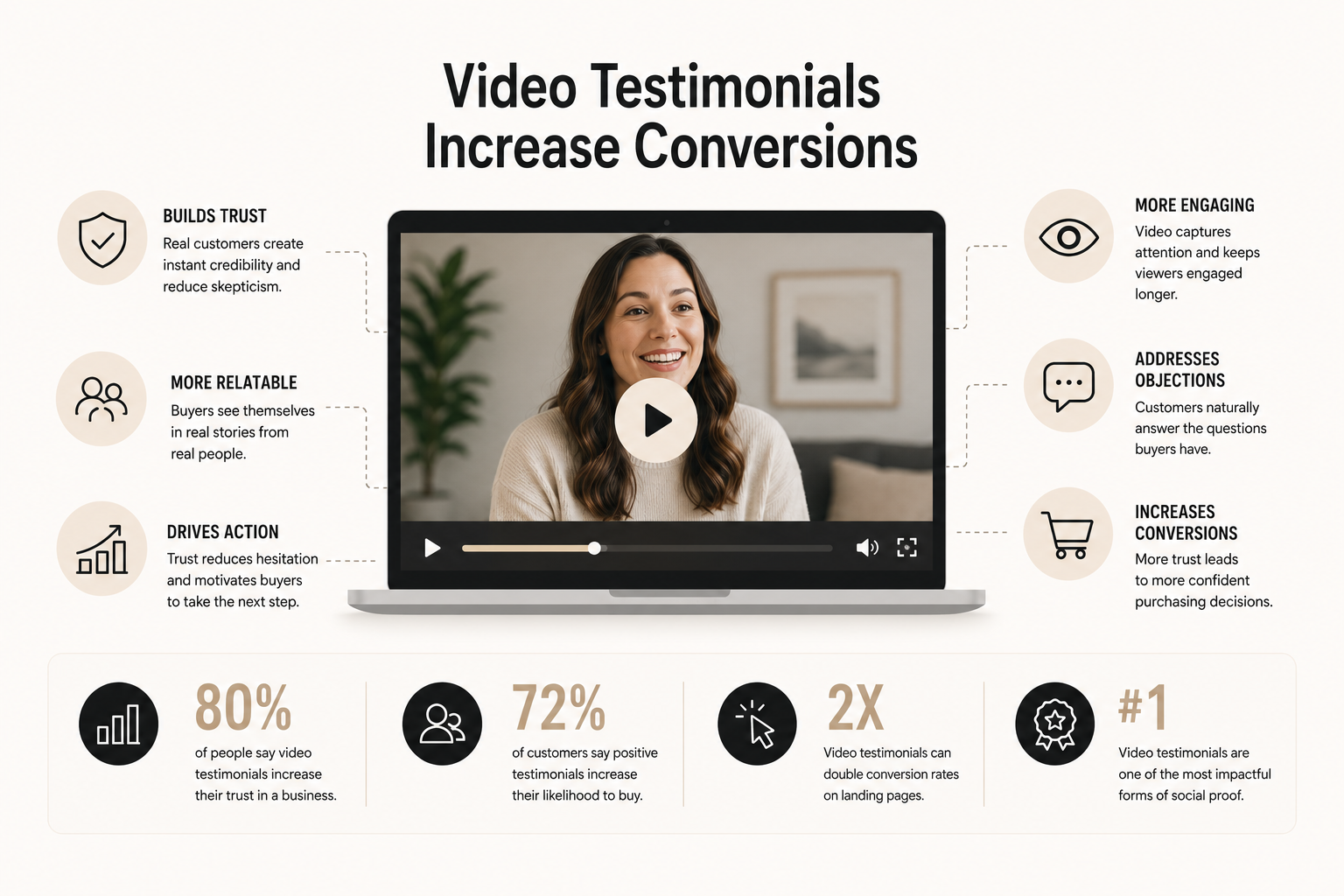
A customer talking directly to camera can build trust.
But a customer story paired with the right visuals becomes something much more emotionally convincing.
That is the real purpose of b-roll in testimonial videos.
Not to make the video look cinematic.
Not to show off editing.
And not to fill empty space.
Great b-roll helps the viewer emotionally experience the story instead of simply hearing it.
That distinction matters enormously.
Because buyers trust what they can emotionally visualize far more than what they can only intellectually understand.
What B-Roll Actually Does In A Testimonial Video
B-roll gives emotional context to the story.
When a customer explains:
-
a frustration
-
a transformation
-
or a meaningful outcome
the supporting visuals help make that experience feel real and tangible.
Without b-roll, the testimonial can sometimes feel emotionally flat even if the story itself is strong.
The viewer hears the words.
But they do not fully feel the experience.
Good b-roll closes that gap.
Why Emotional Visualization Increases Trust
Buyers do not just evaluate information logically.
They mentally picture themselves inside the outcome.
That is why testimonial videos are so effective in the first place. They help viewers emotionally imagine what their own future experience could look like.
B-roll strengthens this process dramatically.
When the visuals support the emotional journey naturally, the viewer begins emotionally stepping into the story instead of simply consuming information passively.
That emotional immersion increases trust.
The Biggest Mistake Businesses Make With B-Roll
Many businesses use b-roll incorrectly.
They focus on making the video look “cool” instead of making it feel believable.
This often leads to:
-
generic stock footage
-
overly cinematic visuals
-
flashy transitions
-
and emotionally disconnected imagery
As soon as the visuals start feeling too commercial or staged, the testimonial loses authenticity.
The viewer subconsciously begins recognizing the content as marketing instead of proof.
And once that happens, skepticism increases.
The Best B-Roll Feels Grounded In Reality
Strong testimonial b-roll feels connected to the customer’s actual experience.
That might include:
-
real work environments
-
natural interactions
-
behind-the-scenes moments
-
authentic routines
-
client meetings
-
products being used naturally
-
or subtle environmental visuals that support the story emotionally
The goal is not visual perfection.
The goal is emotional realism.
The viewer should feel like they are witnessing pieces of a real experience unfold.
Why Documentary-Style B-Roll Performs Better
One reason documentary-style testimonial videos often convert well is because the b-roll feels observational instead of promotional.
The visuals support the story quietly.
They do not scream for attention.
Instead of aggressively “selling,” documentary-style visuals create emotional atmosphere:
-
a business owner working naturally
-
a patient reflecting quietly
-
a team interaction
-
or a customer using the product in real life
These subtle visuals feel emotionally believable because they resemble reality more than advertising.
And buyers trust reality.
Why Overusing B-Roll Can Hurt Trust
A common editing mistake is adding too much b-roll.
Editors often feel pressure to constantly cut away from the interview, but excessive visual movement can make the testimonial feel manufactured and emotionally disconnected.
Sometimes the most powerful thing a viewer can see is the customer’s face while they reflect honestly on an emotional experience.
Strong testimonial editing understands when to:
-
stay on the speaker
-
and when visuals genuinely strengthen the emotional moment
That restraint matters.
How B-Roll Helps Hide Natural Edits Without Feeling Artificial
One practical advantage of b-roll is that it allows editors to tighten pacing while preserving natural delivery.
Small pauses, repeated phrases, or slight restructuring can be smoothed over visually without making the customer sound robotic.
But there is a balance.
The goal is not to aggressively manipulate the story.
It is to improve clarity while preserving authenticity.
Good testimonial editing always protects emotional honesty first.
Why Generic Stock Footage Often Weakens Testimonials
One of the fastest ways to reduce credibility is using generic stock footage that feels disconnected from the customer’s actual story.
Buyers immediately recognize:
-
staged office scenes
-
fake handshakes
-
unrealistic interactions
-
or overly polished stock visuals
These visuals create emotional dissonance because they do not feel connected to reality.
Whenever possible, testimonial b-roll should feel:
-
specific
-
relevant
-
and grounded in the customer’s actual environment or experience
That specificity increases believability significantly.
Why Simpler B-Roll Often Converts Better
Interestingly, simpler visuals often outperform highly cinematic ones.
Natural movement, real environments, and understated visuals tend to feel more emotionally trustworthy because they resemble real life instead of commercial production.
The strongest testimonial videos are rarely trying to impress viewers visually.
They are trying to emotionally reassure them.
That difference changes everything.
Why B-Roll Matters More In High-Trust Industries
B-roll becomes especially important in industries where emotional trust heavily influences buying behavior:
-
healthcare
-
financial advising
-
law firms
-
coaching
-
consulting
-
wellness
-
and high-ticket services overall
In these industries, buyers are not simply evaluating technical skill.
They are evaluating emotional safety.
Strong visuals help reinforce:
-
professionalism
-
humanity
-
confidence
-
and trustworthiness
without feeling overly promotional.
Remote Testimonials Can Still Use Strong B-Roll
Many businesses assume remote testimonials limit visual quality.
In reality, remote interviews captured through tools like Riverside or Zoom can still become highly compelling when paired with thoughtful supporting visuals.
Again, the power comes from emotional relevance.
Not production scale.
The Bottom Line
B-roll makes testimonial videos more powerful because it helps viewers emotionally experience the story instead of simply hearing it.
But the strongest b-roll does not feel overly cinematic or aggressively promotional. It feels grounded, observational, and emotionally believable.
Because at the end of the day, testimonial videos work best when buyers stop feeling like they are watching marketing and start feeling like they are witnessing reality.