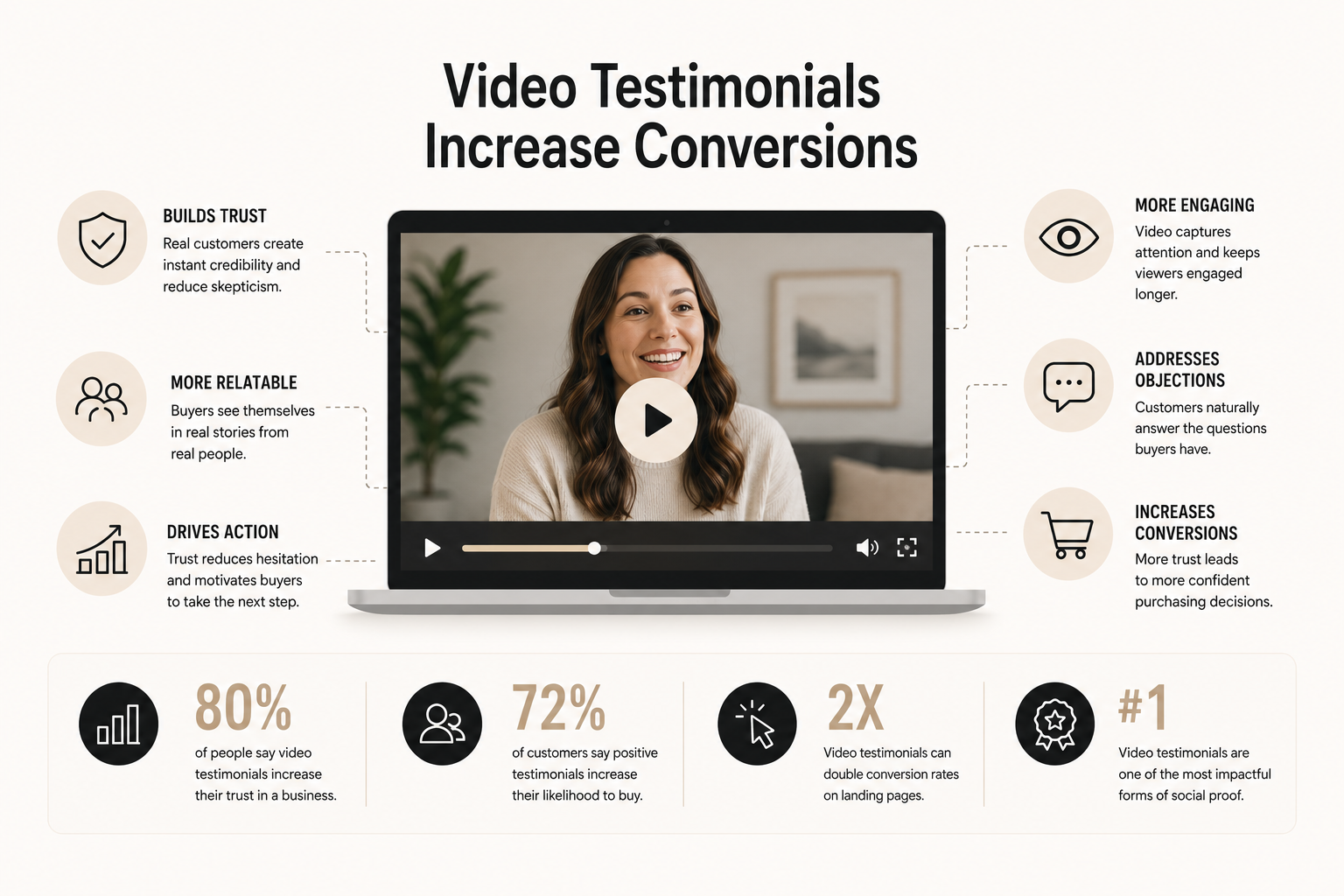
Most businesses already know video testimonials are “good.”
That’s not the real question.
The real question is whether they are effective enough to actually impact sales, conversions, and buying decisions in a measurable way. Because if they’re just another nice piece of content, they’re not worth much.
But if they meaningfully reduce hesitation and help close more business, that changes everything.
If you’ve been wondering how effective video testimonials really are, the answer is surprisingly straightforward.
When done correctly, they are one of the highest-performing trust-building assets in modern marketing.
But there’s a catch.
Most businesses are using them incorrectly, which is why many testimonial videos underperform even when the production quality looks great.
What Makes Video Testimonials So Effective
Video testimonials work because they reduce uncertainty faster than almost any other type of content.
When someone is considering your business, they are trying to answer a series of internal questions:
Will this actually work for me?
Can I trust this company?
What will this experience really feel like?
Am I making the right decision?
Your website copy can help answer some of those questions, but buyers know your marketing is designed to persuade them.
Testimonials change the source of information.
Instead of hearing claims from the company, the prospect hears from someone who has already gone through the same decision-making process. That creates a level of trust that traditional marketing struggles to replicate.
And video amplifies that trust.
People can hear tone, see emotion, and pick up on subtle signals that make the experience feel more believable and more human.
What The Data Says About Video Testimonial Effectiveness
The numbers around video testimonials are difficult to ignore.
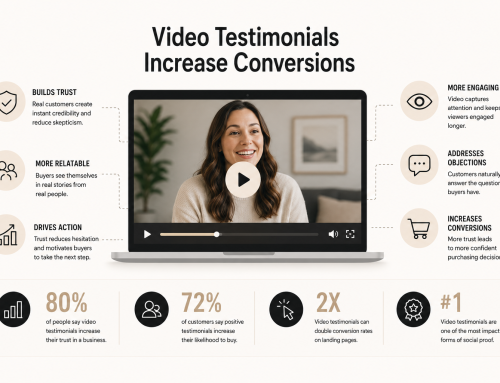
Across thousands of A/B tests, businesses using video testimonials have reported a median conversion lift of roughly 34%, with some implementations exceeding 40% or more depending on placement and structure.
In other studies, adding testimonial videos near key decision points reduced abandonment rates by as much as 41%.
That’s significant.
Especially when you consider that many businesses spend enormous amounts of money trying to improve conversions by just a few percentage points.
Video also dramatically improves message retention.
People retain approximately 95% of a message when consumed through video compared to roughly 10% through text. That means testimonial videos are not just seen more often.
They are remembered more clearly.
And perhaps most importantly, around 77–79% of viewers say video testimonials directly influenced their purchasing decision.
That’s the real metric that matters.
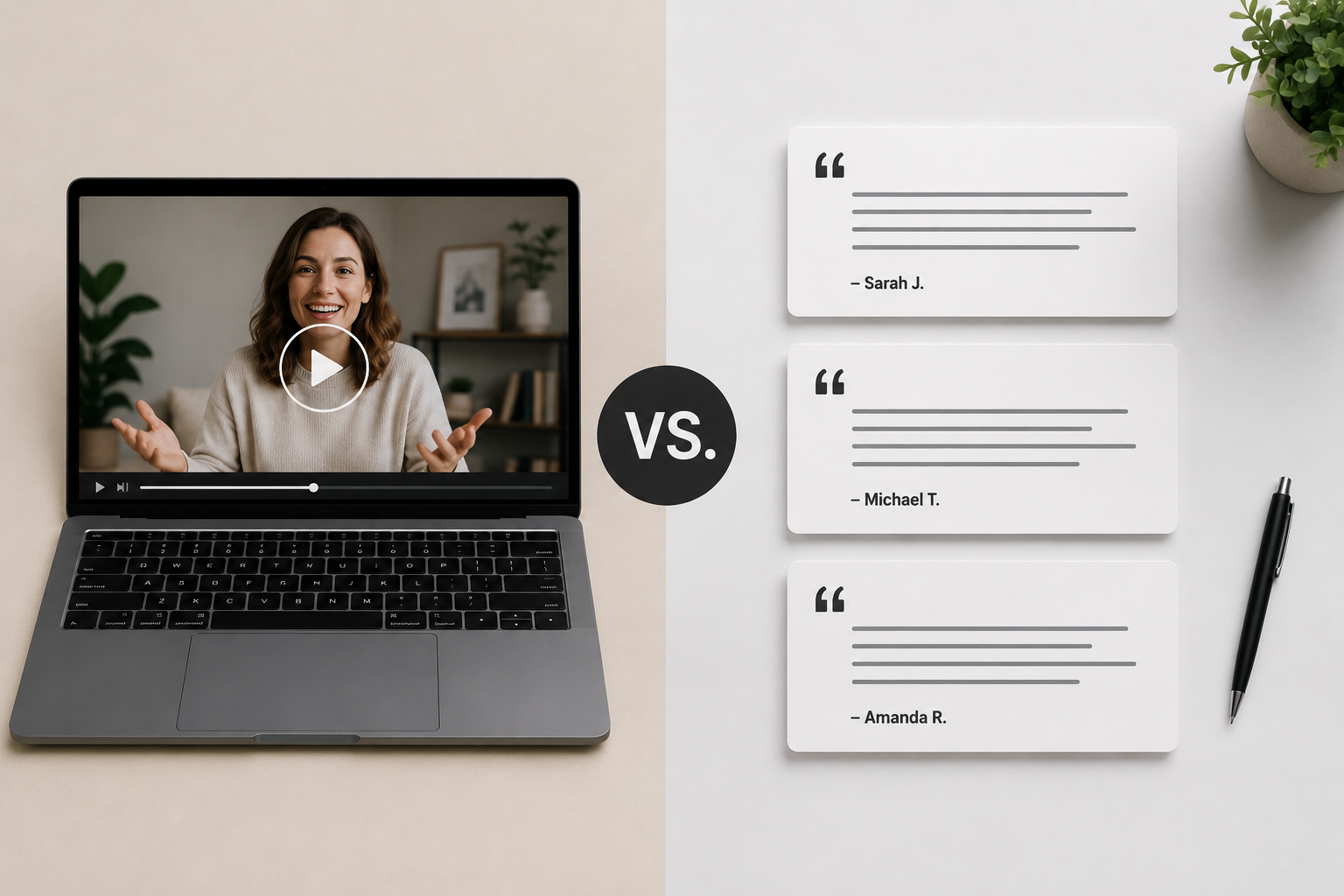
Why Video Testimonials Outperform Written Testimonials
Written testimonials still have value.
But video creates a different level of connection.
A written quote can tell someone a customer was happy. A video can show hesitation, relief, excitement, and confidence in a way text simply cannot.
That emotional context matters because buying decisions are not purely logical.
Even in B2B industries, high-ticket services, and professional consulting, buyers are still trying to reduce emotional risk. They want reassurance that they’re making a smart decision.
Video testimonials help create that reassurance because they feel more transparent and harder to fake.
Why Some Video Testimonials Don’t Work
Despite the data, not all video testimonials perform well.
In fact, many do almost nothing.
That’s usually because they focus on praise instead of proof.
Most testimonial videos say things like:
-
“They were great to work with”
-
“Amazing experience”
-
“Highly recommend”
These statements sound positive, but they don’t help a buyer evaluate anything.
They don’t explain:
-
what problem existed before
-
what hesitation the customer had
-
why they chose that company
-
what changed afterward
Without those elements, the testimonial becomes generic.
And generic testimonials rarely influence buying behavior.
The Psychology Behind Why Testimonials Increase Conversions
At a psychological level, testimonials work because they create relatability.
The buyer sees someone like them experiencing a similar problem, making a similar decision, and reaching a positive outcome.
That creates what psychologists often refer to as social proof.
But the strongest testimonials go deeper than simple validation.
They reduce perceived risk.
That’s why the best testimonial videos include hesitation and uncertainty instead of removing them. When a customer explains what they were nervous about before moving forward, the viewer immediately relates because they are likely feeling the same thing.
That moment creates trust.
And trust is what moves conversions.
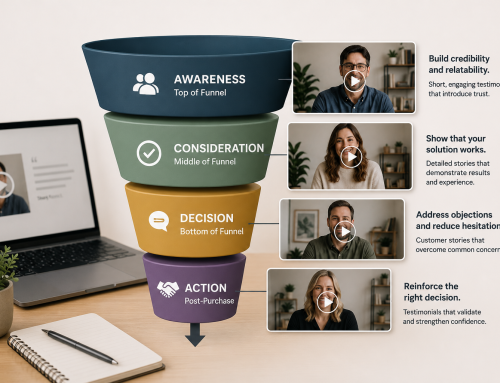
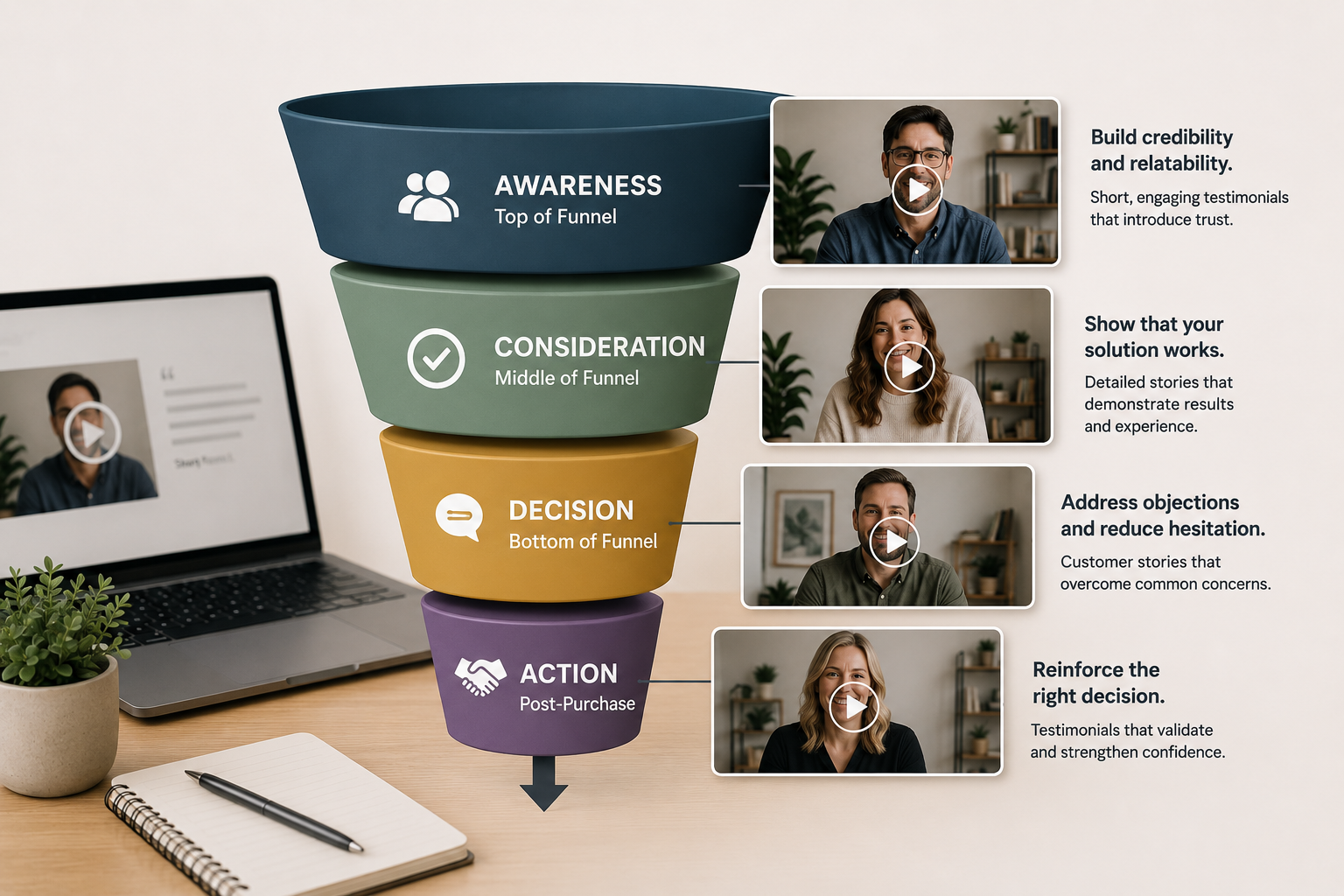
Where Video Testimonials Are Most Effective
Placement matters almost as much as the testimonial itself.
Video testimonials tend to perform best:
-
on homepages
-
near calls-to-action
-
on service or product pages
-
near pricing sections
-
within sales follow-up emails
This is because they work best at moments where hesitation naturally appears.
If a testimonial is hidden on a separate page, most people will never see it at the moment they actually need reassurance.
The goal is not just to have testimonials.
It’s to place them where decisions are being made.
What High-Performing Video Testimonials Have In Common
The testimonial videos that consistently increase conversions usually share a few things in common.
They feel authentic, not scripted.
They focus on the customer’s journey instead of the company’s accomplishments.
They include specific details and real transformation instead of broad praise.
And they are structured around buyer psychology, meaning they mirror the emotional path a future customer is already experiencing.
This is where most businesses go wrong.
They focus heavily on production quality while ignoring story structure.
But story is what actually drives performance.
The Bottom Line
So, how effective are video testimonials?
Extremely effective when they are done correctly.
They increase trust, reduce hesitation, improve conversion rates, and help buyers feel more confident making a decision. In many cases, they become one of the highest-performing assets in an entire marketing funnel.
But effectiveness does not come from simply recording happy customers.
It comes from capturing the right story, structuring it correctly, and placing it where buyers need reassurance the most.
Most businesses already have clients with powerful stories.
They just haven’t turned those stories into assets that actually influence decisions.