Two businesses can have equally happy customers and completely different results from their testimonial videos.
One video quietly increases trust, improves conversions, and makes sales conversations easier.
The other gets posted on the website, receives a few compliments internally, and then does almost nothing.
The difference is rarely the camera.
It is almost always the structure of the story.
That is why studying testimonial video examples correctly matters so much. Most businesses focus on visuals, editing style, or production quality while overlooking the thing buyers actually respond to emotionally.
Believability.
Because testimonial videos do not work simply because customers say nice things.
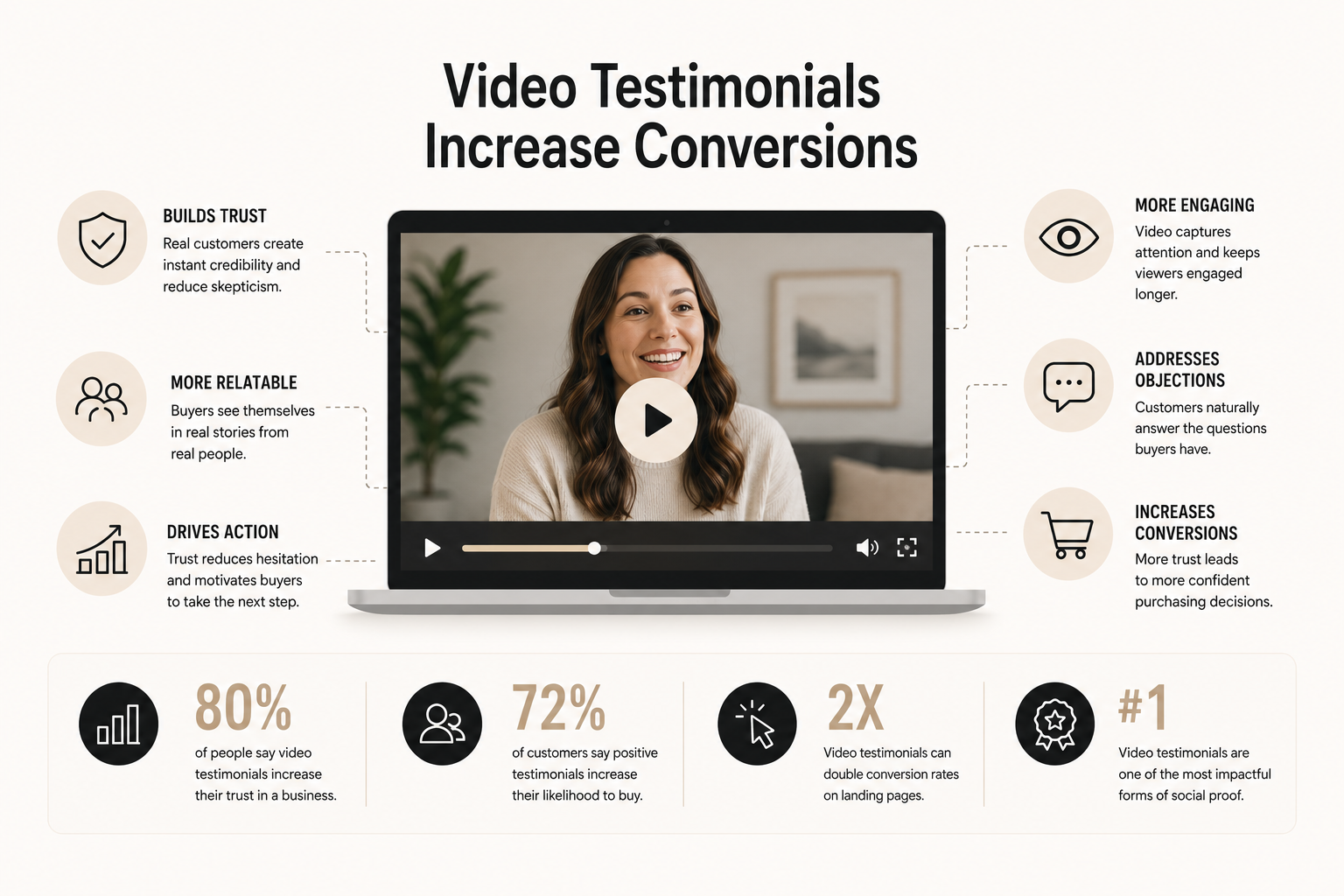
They work when buyers emotionally trust the experience being described.
What Makes A Testimonial Video Effective For Business
The strongest testimonial videos all accomplish one critical thing.
They reduce uncertainty.
The buyer watches the story and begins feeling:
-
safer
-
more emotionally connected
-
and more confident that the business can help someone like them
That emotional shift directly impacts buying behavior.
The best testimonial videos achieve this by focusing less on praise and more on transformation.
Instead of simply hearing:
-
“Great company”
the viewer understands:
-
what problem existed beforehand
-
what hesitation the customer had
-
why they decided to move forward
-
and what changed afterward
That emotional progression is what builds trust.
Example #1: The “Skeptical Buyer” Testimonial
One of the highest-converting testimonial formats starts with hesitation.
The customer openly explains:
-
why they were uncertain
-
what concerns they had
-
or why they almost did not move forward
This immediately creates emotional relatability because future buyers are usually experiencing similar hesitation themselves.
As the story unfolds, the customer explains what changed emotionally and why they ultimately trusted the business.
Why this works:
-
hesitation feels honest
-
emotional tension creates curiosity
-
and the transformation becomes more believable
Buyers trust testimonials more when uncertainty is acknowledged instead of hidden.
Example #2: The Before-And-After Business Transformation
This style works especially well for:
-
agencies
-
consultants
-
SaaS companies
-
marketing firms
-
and service businesses overall
The customer explains:
-
what challenges existed beforehand
-
what was not working
-
and how things changed afterward
The stronger the contrast, the stronger the testimonial usually becomes.
For example:
-
difficulty generating leads before implementing a trust-building strategy
-
or struggling with buyer hesitation before adding customer proof throughout the website
Why this works:
-
buyers clearly visualize the improvement
-
transformation feels tangible
-
and the outcome becomes emotionally compelling
Example #3: The Documentary-Style Customer Story
Documentary-style testimonial videos often perform extremely well because they feel emotionally real instead of overly commercial.
The pacing feels natural.
The storytelling feels reflective.
And the customer feels like a real person instead of a spokesperson.
This format focuses heavily on:
-
emotional honesty
-
life or business context
-
and authentic reflection throughout the story
Why this works:
-
viewers emotionally immerse themselves in the experience
-
the testimonial feels believable
-
and trust builds more naturally
Authenticity consistently outperforms excessive polish.
Example #4: The Conversational Remote Testimonial
Many businesses assume testimonial videos require large productions to feel credible.
In reality, conversational remote interviews often perform exceptionally well because they feel less staged and more genuine.
Tools like Riverside and Zoom allow businesses to capture emotionally honest customer stories remotely while still maintaining strong quality.
Why this works:
-
customers feel more relaxed
-
delivery becomes more natural
-
and the testimonial feels emotionally believable
Often, realism converts better than production value.
Example #5: The Emotional Outcome Testimonial
Some of the strongest business testimonials focus less on metrics and more on emotional outcomes.
The customer explains:
-
relief
-
confidence
-
peace of mind
-
reduced stress
-
or feeling understood
This works especially well in:
-
coaching
-
healthcare
-
consulting
-
law firms
-
financial services
-
and other trust-heavy industries
Why this works:
-
emotional safety drives buying decisions
-
viewers connect psychologically
-
and trust forms faster
People often buy emotionally before they justify logically.
Why Generic Testimonials Usually Fail
Weak testimonials tend to sound similar:
-
“Amazing experience”
-
“Great team”
-
“Highly recommend”
These statements are positive, but they lack emotional depth and specificity.
They do not explain:
-
what the customer was experiencing beforehand
-
why the decision felt risky
-
what made them move forward
-
or what changed afterward
Without those elements, the testimonial becomes forgettable.
And forgettable testimonials rarely increase conversions.
Why Authenticity Matters More Than Perfection
One of the biggest mistakes businesses make is trying to make testimonials sound too polished.
The more controlled a testimonial feels, the more skepticism it creates.
Buyers trust:
-
natural delivery
-
conversational reflection
-
emotional honesty
-
and believable imperfection
That is why many simpler testimonials outperform highly produced corporate videos.
People trust people.
Not marketing.
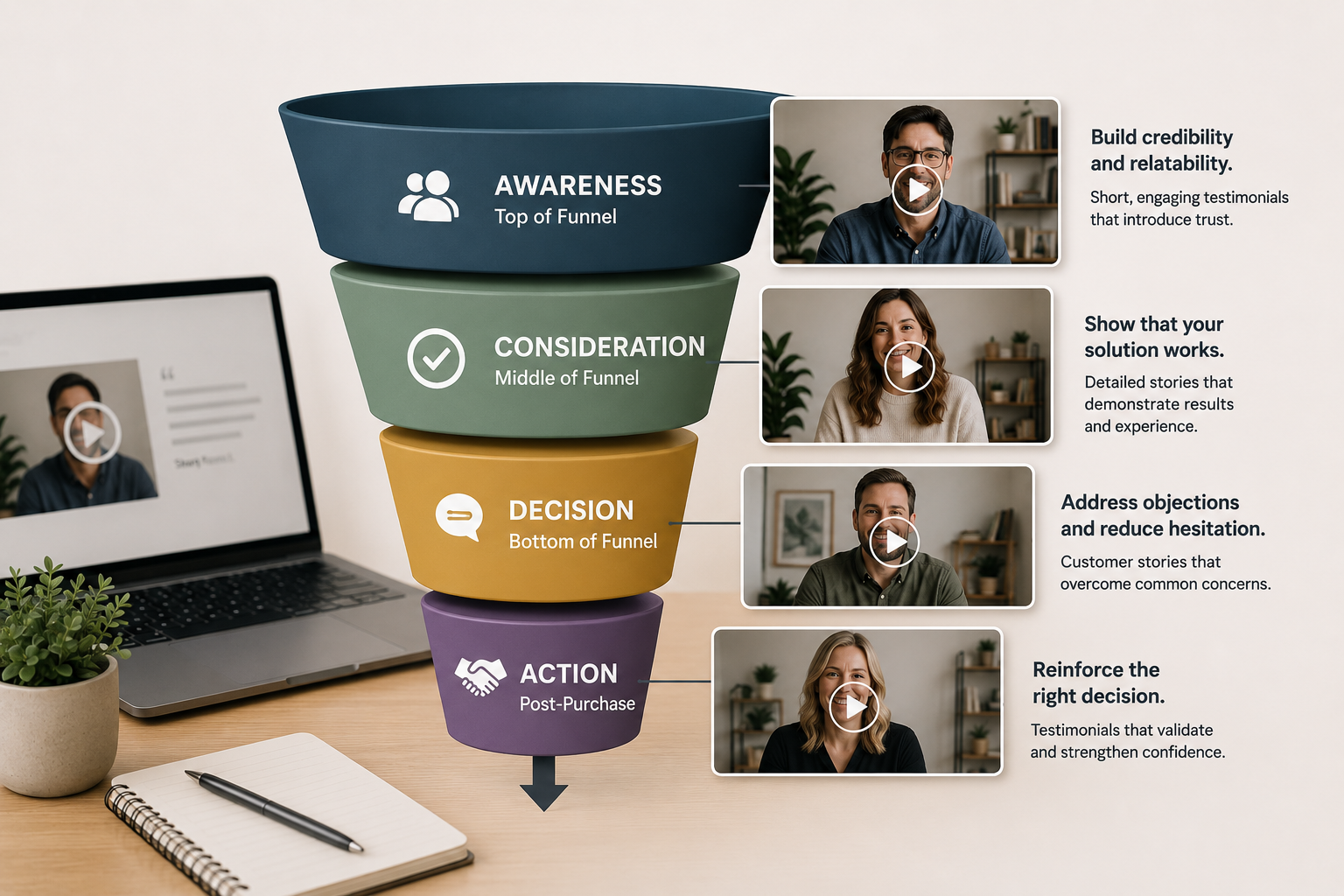
Where Businesses Should Use Testimonial Videos
Strong testimonial videos should not live on a hidden testimonials page alone.
The highest-performing businesses integrate them throughout the buyer journey:
-
homepage sections
-
service pages
-
consultation booking pages
-
sales emails
-
landing pages
-
and advertising campaigns
This allows testimonial content to reduce uncertainty exactly when buyers need reassurance most.
What Businesses Should Actually Study In Great Examples
A lot of companies analyze testimonial videos incorrectly.
They focus heavily on:
-
visuals
-
transitions
-
camera quality
-
or editing style
But the strongest examples succeed because of:
-
emotional structure
-
storytelling
-
relatability
-
hesitation
-
and transformation
That is what buyers emotionally respond to.
And that is what ultimately drives conversions.
The Bottom Line
The best testimonial video examples for business are not necessarily the most cinematic or expensive.
They are the ones that feel emotionally believable.
They acknowledge uncertainty, show transformation honestly, and help buyers emotionally imagine themselves experiencing similar results.
Because testimonial videos work best when they stop feeling like marketing and start feeling like proof.