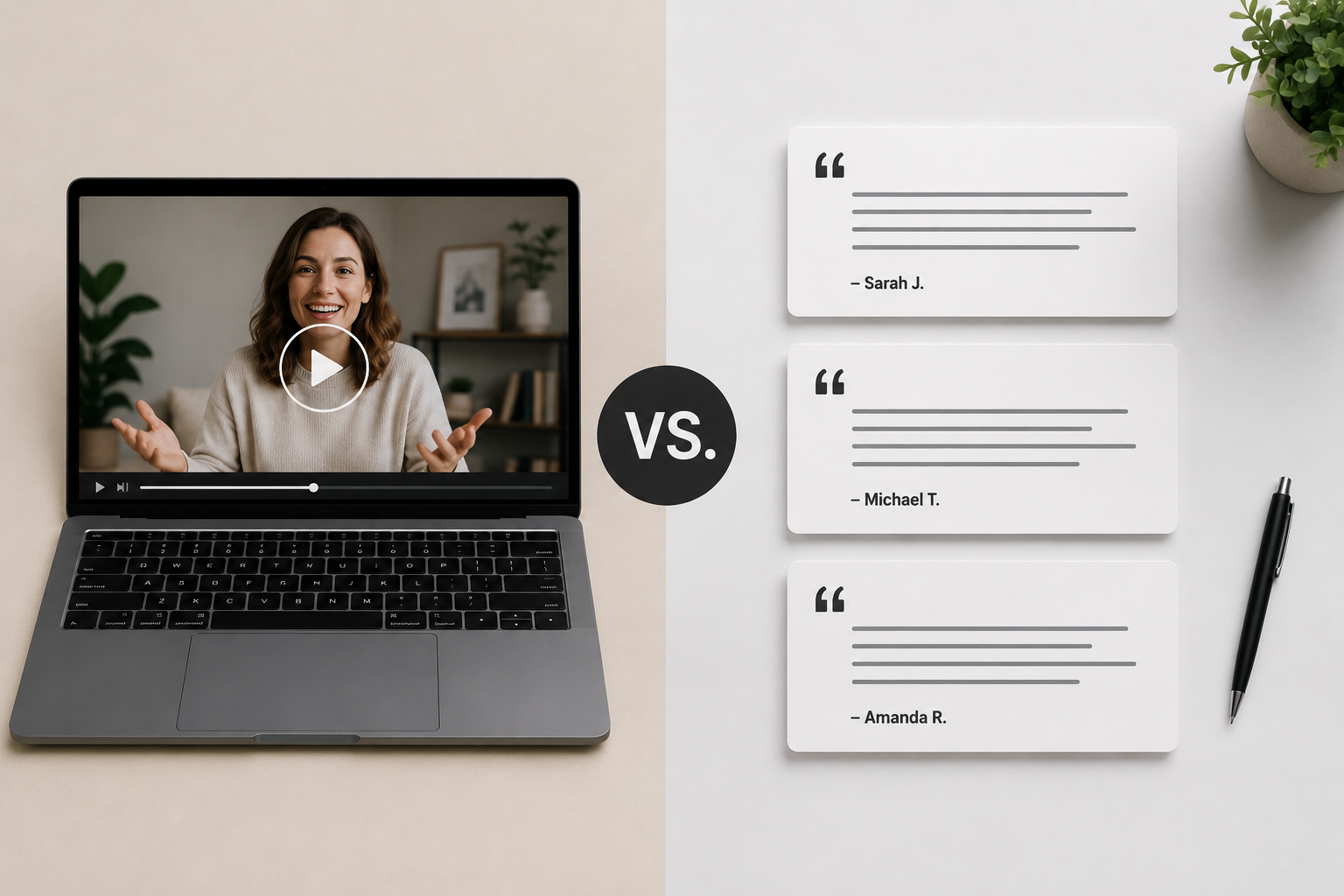
You can usually tell within seconds whether a testimonial feels believable.
Not because the customer says anything wrong.
But because something about the video feels too polished, too rehearsed, or too emotionally controlled.
The customer sounds perfect.
The editing feels overly clean.
Every sentence lands a little too smoothly.
And even if the story is technically real, the viewer starts emotionally pulling away.
That reaction matters more than most businesses realize.
Because testimonial videos only work when buyers trust them. The moment the testimonial starts feeling like marketing instead of genuine proof, conversions begin dropping.
Why Buyers Are More Skeptical Than Ever
Modern buyers have seen years of:
-
polished advertising
-
influencer promotions
-
scripted “customer success” videos
-
and exaggerated marketing claims
As a result, people have become highly sensitive to anything that feels manufactured.
This creates a challenge for businesses.
The harder a testimonial tries to look perfect, the more likely buyers are to question whether it is emotionally authentic.
That skepticism quietly weakens trust.
And trust is the entire purpose of a testimonial in the first place.
The Biggest Reason Testimonials Feel Fake
Most fake-feeling testimonials are over-controlled.
Businesses often:
-
script exact responses
-
over-coach customers
-
heavily polish delivery
-
aggressively edit pauses
-
and remove emotional imperfection entirely
The result may look professional.
But emotionally, it stops feeling human.
Viewers subconsciously recognize that the customer no longer sounds like someone naturally reflecting on an experience. They sound like someone performing a role.
That distinction changes everything psychologically.
Why Authenticity Builds Trust Faster Than Polish
Authenticity feels emotionally believable because it mirrors how real people actually communicate.
Real people:
-
pause
-
search for words
-
reflect emotionally
-
repeat themselves slightly
-
and speak conversationally
These natural imperfections make the testimonial feel trustworthy because the story resembles reality instead of advertising.
Ironically, slight imperfection often increases conversions.
Because buyers trust honesty more than perfection.
Why Emotional Honesty Matters More Than Production Quality
A beautifully filmed testimonial can still fail emotionally if the customer does not feel genuine.
At the same time, a simpler testimonial recorded remotely can dramatically outperform expensive productions if the emotional honesty feels real.
This is one reason remote interviews often work extremely well.
Tools like Riverside and Zoom frequently create more relaxed and conversational environments where customers naturally speak more honestly.
And honest reflection builds trust much faster than polished performance.
The Most Believable Testimonials Include Hesitation
One of the strongest trust-building elements in a testimonial is hesitation.
Most businesses try to avoid this entirely because they think uncertainty weakens the story.
In reality, it strengthens it enormously.
When customers openly discuss:
-
skepticism
-
fear
-
concerns
-
price hesitation
-
or emotional uncertainty
buyers immediately relate.
The viewer thinks:
-
“I have that same concern.”
-
“I’m worried about the exact same thing.”
That emotional alignment creates credibility because the story now feels psychologically real instead of promotional.
Why Generic Praise Feels Untrustworthy
Testimonials that rely only on praise often feel emotionally hollow.
Statements like:
-
“Amazing experience”
-
“Great company”
-
“Highly recommend”
sound positive, but they lack emotional depth and specificity.
Strong testimonials feel believable because they explain:
-
what problem existed beforehand
-
why the customer hesitated
-
what changed afterward
-
and how the experience affected them emotionally
Specificity creates realism.
And realism creates trust.
Why Editing Plays A Massive Role In Authenticity
Editing can either preserve authenticity or completely destroy it.
One of the biggest editing mistakes is over-tightening the conversation until the customer sounds unnaturally polished. Removing every pause, reflection moment, and conversational imperfection often strips away emotional realism.
The strongest testimonial edits preserve:
-
natural pacing
-
emotional pauses
-
conversational delivery
-
and human imperfection
while still maintaining clarity and engagement.
That balance is what creates believable storytelling.
Why Documentary-Style Testimonials Feel More Real
Documentary-style testimonial videos often perform well because they focus on emotional storytelling instead of aggressive promotion.
The customer feels like the center of the story rather than simply a tool for selling.
This style often includes:
-
reflection
-
emotional context
-
realistic pacing
-
natural environments
-
and observational b-roll
That subtle realism dramatically increases emotional credibility.
Because the viewer feels like they are witnessing a real experience unfold.
What Buyers Are Actually Looking For
At the core of every testimonial, buyers are searching for emotional reassurance.
They want to know:
-
“Would this feel safe for someone like me?”
-
“Can I trust this business?”
-
“Does this story feel believable?”
The strongest testimonial videos answer those questions emotionally instead of just verbally.
That is why authenticity matters so much.
Why Real Testimonials Increase Conversions
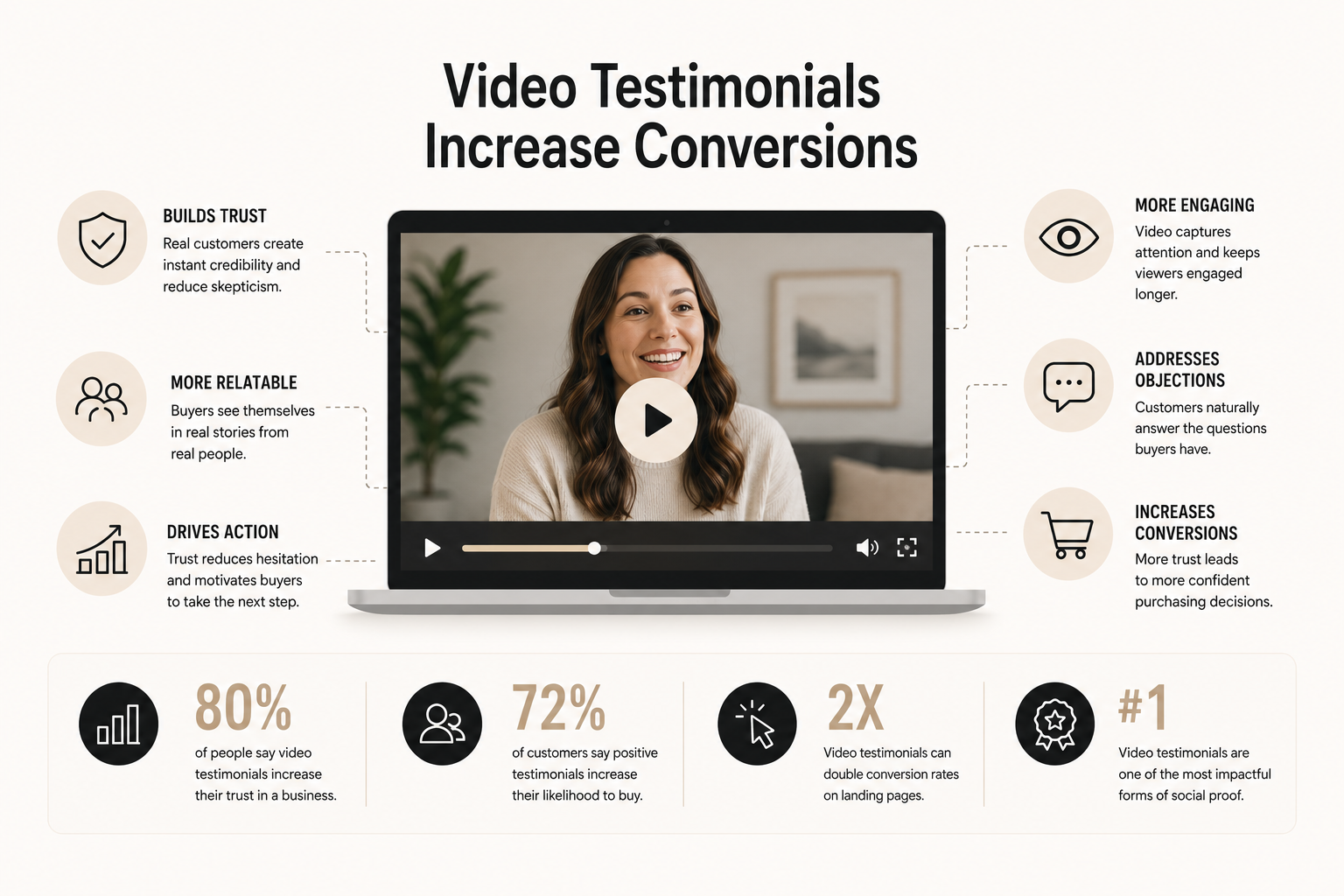
Trust reduces hesitation.
And reduced hesitation increases conversions.
When a testimonial feels emotionally real, buyers stop viewing it as “marketing” and start processing it as evidence that the outcome may genuinely be possible for them too.
That emotional shift changes behavior dramatically.
The Bottom Line
Most testimonial videos feel fake because they are over-produced, over-scripted, and emotionally over-controlled.
The testimonials that perform best are the ones that preserve humanity instead of polishing it away. They allow customers to sound like real people reflecting honestly on real experiences.
Because buyers do not trust perfection nearly as much as they trust emotional truth.