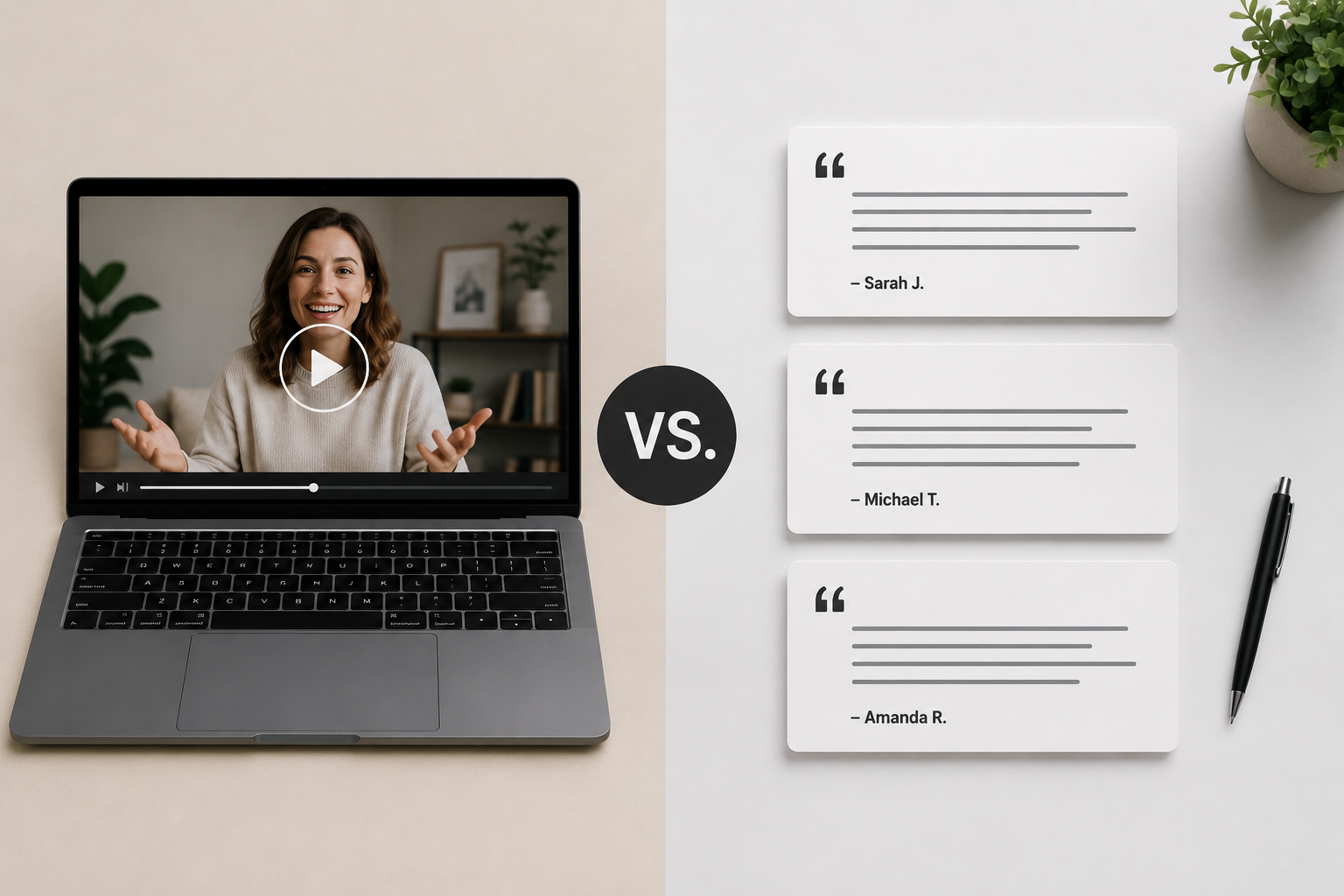
If you’re deciding between video testimonials and written testimonials, the answer isn’t that one is useful and the other isn’t.
Both can build trust. Both can provide social proof. And both deserve a place in a strong marketing strategy.
But they don’t do the same job.
A written testimonial gives a prospective customer a positive statement to read. A video testimonial gives them a person to watch, listen to, and evaluate for themselves. They can hear the customer’s tone, see their expression, and understand the experience in a way that a few sentences in quotation marks simply can’t replicate.
That difference becomes especially important when someone is considering an expensive, complicated, or trust-heavy purchase.
So, video testimonials vs. written testimonials: which converts better?
For businesses where trust plays a major role in the buying decision, we believe video has a significant advantage. But understanding why is much more useful than simply declaring video the winner.
Written Testimonials Are Still Valuable
Written testimonials have been used for decades for a reason. They’re easy to consume, simple to place throughout a website, and can reinforce an important point without requiring someone to stop and watch a video.
A strong written testimonial can work particularly well when it is specific.
For example, there is a big difference between:
“Amazing company. Highly recommend!”
and a testimonial explaining exactly what problem the customer had, why they chose the business, and what measurable result they experienced afterward.
Specific written testimonials provide useful proof and can be placed strategically near services, calls-to-action, pricing information, or claims that need additional credibility.
We aren’t interested in replacing every written testimonial with video. The stronger strategy is understanding where each format works best.
The Limitation Of Written Testimonials Is What You Can’t See
The biggest weakness of a written testimonial isn’t necessarily what it says. It’s everything that has been removed from the experience.
You can’t hear how the customer said it. You can’t see their expression when they describe the result. You don’t hear the pause before they talk about what they were worried about, or see their reaction when they remember the moment they realized they had made the right decision.
You are also asking the reader to trust that the quote accurately represents what the customer actually said and felt.
That doesn’t mean people automatically distrust written testimonials. It simply means there are fewer signals available to help them evaluate the story.
Video gives them more.
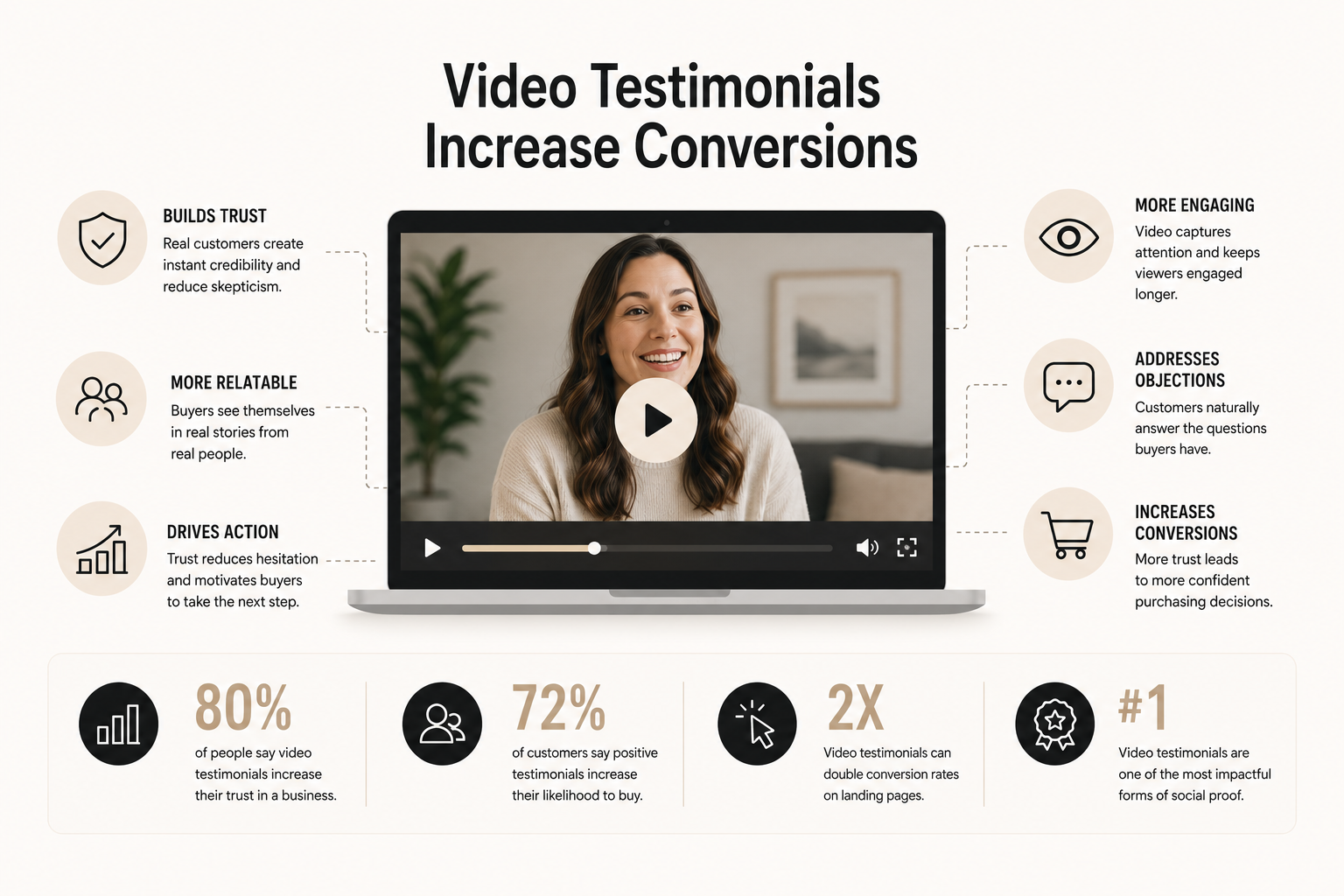
Video Testimonials Give Buyers More Information
When someone watches a real customer speak about an experience, they are processing much more than the words themselves.
They are noticing tone of voice, facial expressions, body language, enthusiasm, hesitation, emotion, and countless other subtle signals that naturally occur during conversation.
Those signals matter because buyers are constantly evaluating credibility.
If someone says, “I was honestly nervous about making the investment,” and then explains what happened after they moved forward, the viewer gets to experience that reflection rather than simply read a polished version of it.
That creates a different level of connection.
It is one of the reasons we believe the best video testimonials should not be overly scripted. The value of video is partly in allowing prospective customers to experience the person behind the words.
If you polish all of that humanity away, you lose one of video’s biggest advantages.
Video Can Make The Customer More Relatable
The best testimonials don’t just prove that your company has happy customers. They help prospective buyers identify with those customers.
Imagine you’re researching a financial advisor and you see a video from someone who appears to be at a similar stage of life. They begin describing the exact uncertainty you’ve been feeling around retirement planning.
Or you’re considering a business service and hear a founder explain that they hesitated because they weren’t sure the investment would pay off.
You immediately have a reason to keep listening.
The customer is no longer simply providing an endorsement. They’re becoming a reference point for the person making the next buying decision.
Written testimonials can accomplish some of this, but video allows that relatability to happen much faster because the viewer can actually see and hear the person telling the story.
Video Testimonials Can Address Objections Without Feeling Like A Sales Pitch
One of the most valuable things we look for when creating testimonial videos is hesitation.
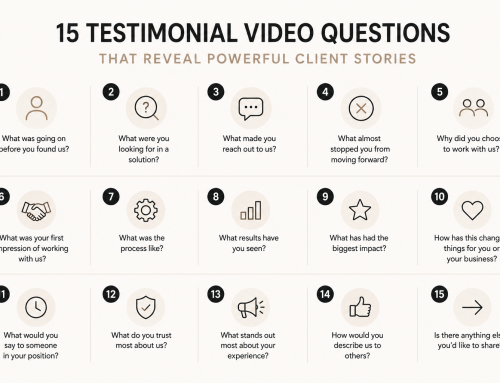
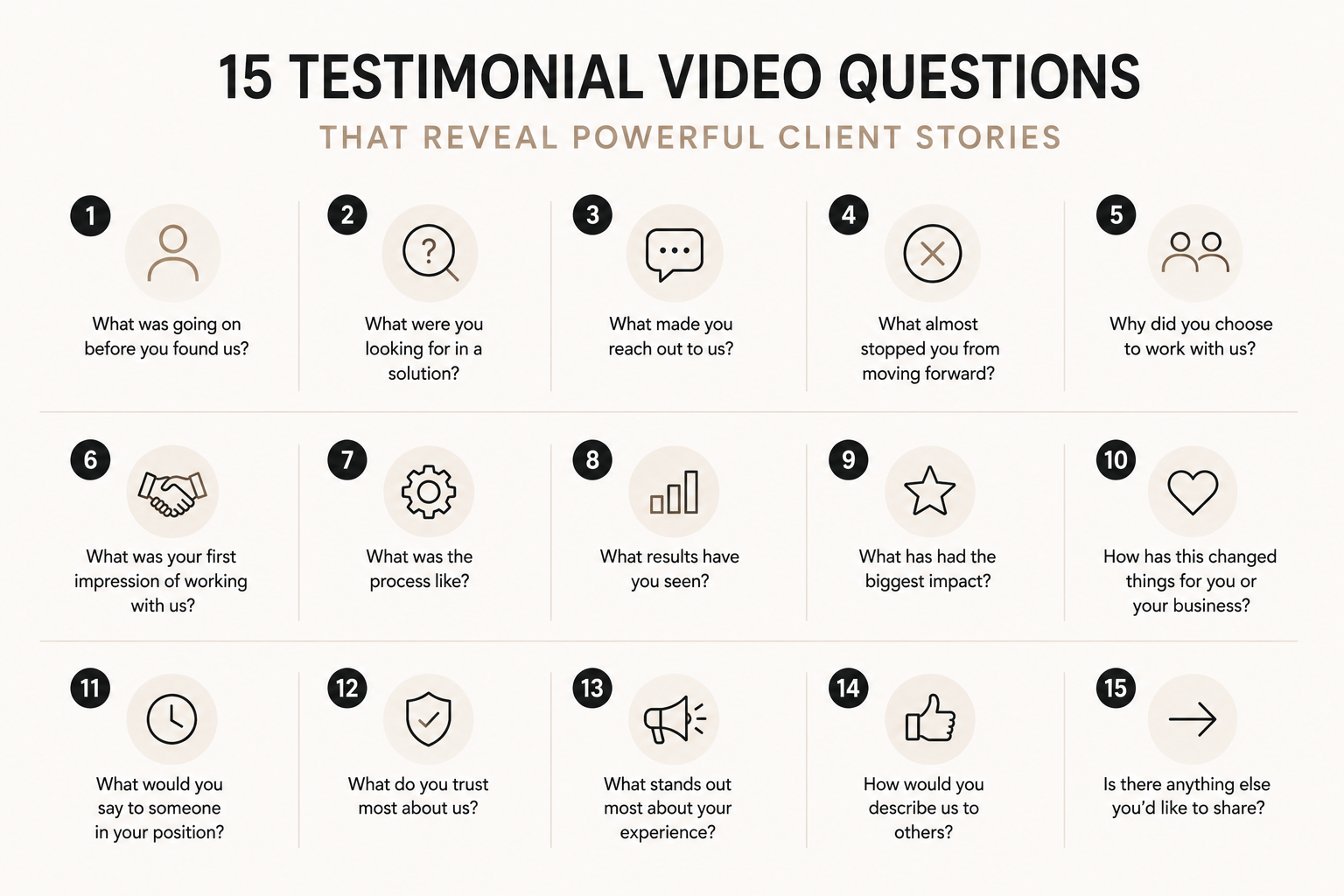
What almost stopped the customer from buying?
Maybe it was price. Maybe they were skeptical about the results. Maybe they had been disappointed by another provider. Maybe they weren’t sure the service was really necessary.
These moments are incredibly useful because prospective customers are often carrying the exact same concerns.
When the company addresses those objections directly, it can feel like sales.
When another customer explains that they had the same concern and then describes their actual experience, it feels completely different.
They’re not being asked to sell the business. They’re simply telling the truth about their own decision.
That’s an important distinction.
Why Remote Video Testimonials Have Changed The Equation
Historically, creating professional video testimonials could mean coordinating locations, production crews, cameras, lighting, travel, and everyone’s schedules.
That made written testimonials much easier to collect.
Remote recording has changed that dramatically.
A customer can now sit in their own home or office and have a guided conversation with an interviewer without turning the testimonial into a major production.
We actually see that as an advantage, not a compromise.
Highly polished shoots can sometimes make people more conscious of being filmed. Put someone under studio lights with a camera crew watching them, and even a naturally confident person can start thinking about how they sound instead of simply answering the question.
Remote interviews can remove much of that pressure. The customer is in a familiar environment having a conversation with another person, which can lead to more natural responses and more honest reflection.
Platforms such as Riverside also make it possible to capture high-quality recordings remotely, so businesses don’t necessarily have to choose between professional quality and conversational authenticity.
For testimonial content specifically, that combination is incredibly valuable.
Written Testimonials Are Faster To Scan
There is one area where written testimonials have a clear practical advantage: speed.
Someone can scan a short quote in seconds.
That matters, especially on websites where visitors may not be ready to stop and watch a 90-second video.
This is why we don’t recommend treating the decision as video or text.
A much stronger approach is often to use them together.
A powerful quote pulled from the video can sit above or beside the video itself. Someone scanning the page immediately sees the key takeaway, while someone who wants more proof can watch the full customer story.
Now you’re serving both types of visitors.
Video Testimonials Give You More Content From One Customer Story
Another major advantage of video is how much content can come from a single interview.
One strong customer conversation can potentially become a primary testimonial video along with shorter clips focused on specific topics, social media content, sales enablement assets, website videos, advertising creative, and written quotes pulled directly from the interview.
That makes the testimonial much more versatile.
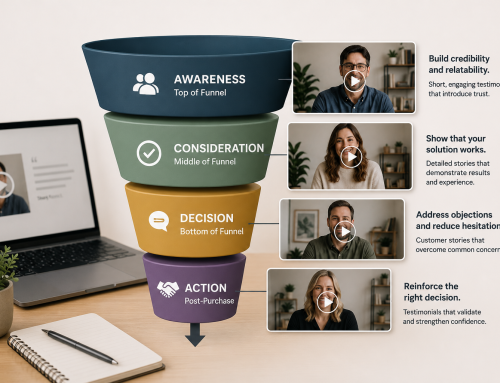
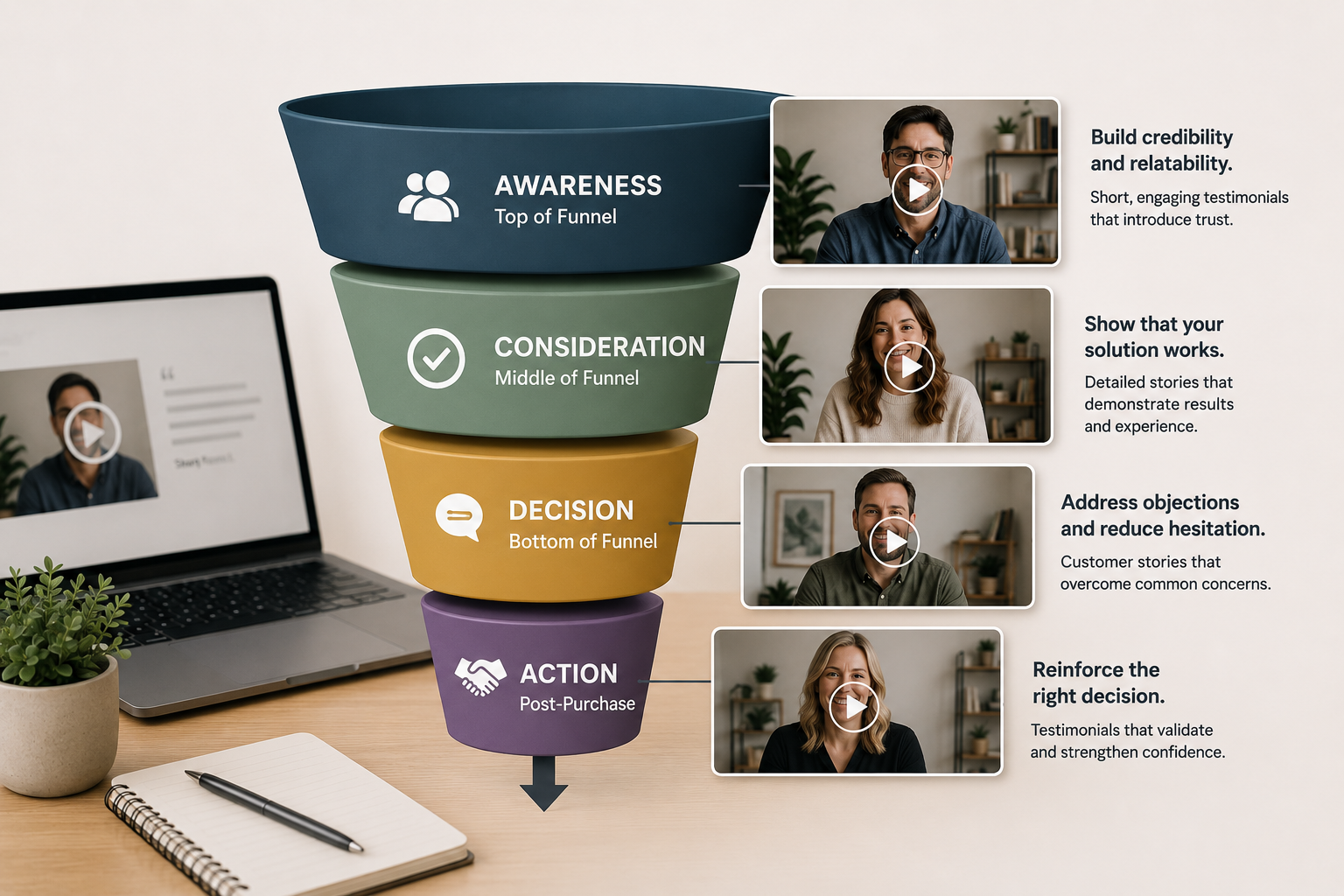
Instead of collecting one paragraph from a customer and placing it on a website, you’re capturing the customer’s experience in a format that can be repurposed throughout the buyer journey.
This is one reason we encourage businesses to think beyond simply “getting a testimonial.”
You’re building a library of customer proof.
Which Type Of Testimonial Is More Trustworthy?
This depends heavily on how the testimonial is created.
A vague video testimonial can still be weak. A specific written testimonial can still be excellent.
The format alone doesn’t create trust.
The story does.
But video gives you more tools for communicating that story. When the customer is genuine, the questions are thoughtful, and the edit preserves their natural personality, the viewer has significantly more information available to evaluate whether they believe what they’re hearing.
That becomes especially valuable for businesses where the customer needs a high degree of confidence before buying.
Think about financial services, legal services, healthcare, consulting, coaching, B2B services, SaaS, and other high-consideration purchases.
In these situations, prospects aren’t simply asking, “Does this company have good reviews?”
They’re trying to answer a much bigger question:
“Do I trust these people enough to choose them?”
So, Do Video Testimonials Convert Better Than Written Testimonials?
There isn’t a responsible universal conversion percentage we can apply to every business. Results depend on the offer, audience, testimonial quality, placement, website, sales process, and many other factors.
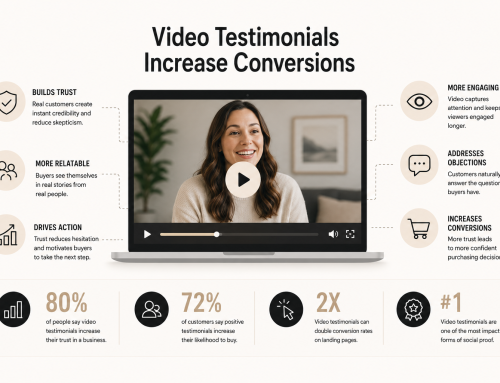
But from a testimonial strategy perspective, video has an important advantage: it gives buyers more evidence.
They aren’t simply seeing what a customer supposedly said. They’re hearing the customer explain the experience in their own voice.
That can make video particularly powerful when the buying decision requires significant trust.
The goal, however, shouldn’t be to eliminate written testimonials. Use written proof where people need something quick to scan, and use video where buyers need deeper reassurance.
The two formats can strengthen each other.
The Best Strategy Is Usually Video + Written Proof
If you already have strong video testimonials, you also have the raw material for strong written testimonials.
Pull compelling quotes from those conversations and place them strategically throughout your website. Pair a short quote with the customer’s video. Use shorter clips to address individual objections and longer edits where someone needs the complete story.
Now you’re not forcing prospects to consume social proof in one specific way.
You’re surrounding important buying decisions with credible customer evidence in multiple formats.
That’s a much stronger strategy than simply adding a few quotes to a testimonial slider and considering the job finished.
The Bottom Line
When comparing video testimonials vs. written testimonials, written testimonials still have an important role. They’re fast, flexible, and easy for buyers to scan.
But video provides something text can’t fully recreate: the opportunity to experience the person behind the testimonial.
Prospective customers can hear their voice, see their expression, understand their hesitation, and listen as they explain what actually changed. When that story is captured naturally, it can create a level of credibility and connection that is difficult to achieve through a written quote alone.
Our approach is not to choose between video and written testimonials.
It’s to start with the richest form of customer proof and then get as much value from it as possible.
Capture the real conversation on video. Build the customer story around the parts future buyers actually care about. Then use that story across video, written quotes, social content, sales materials, and the places on your website where trust matters most.
That’s how testimonials become more than reviews.
They become part of the sales process.